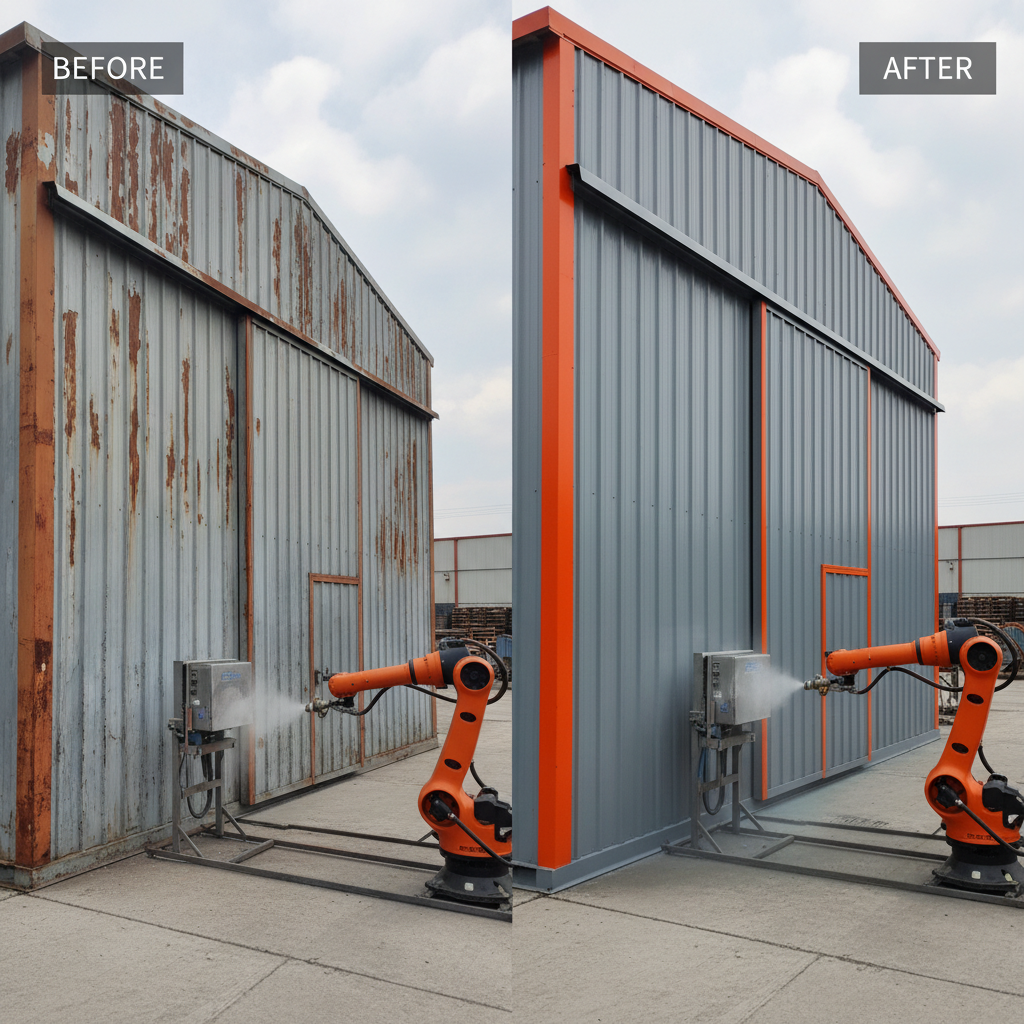
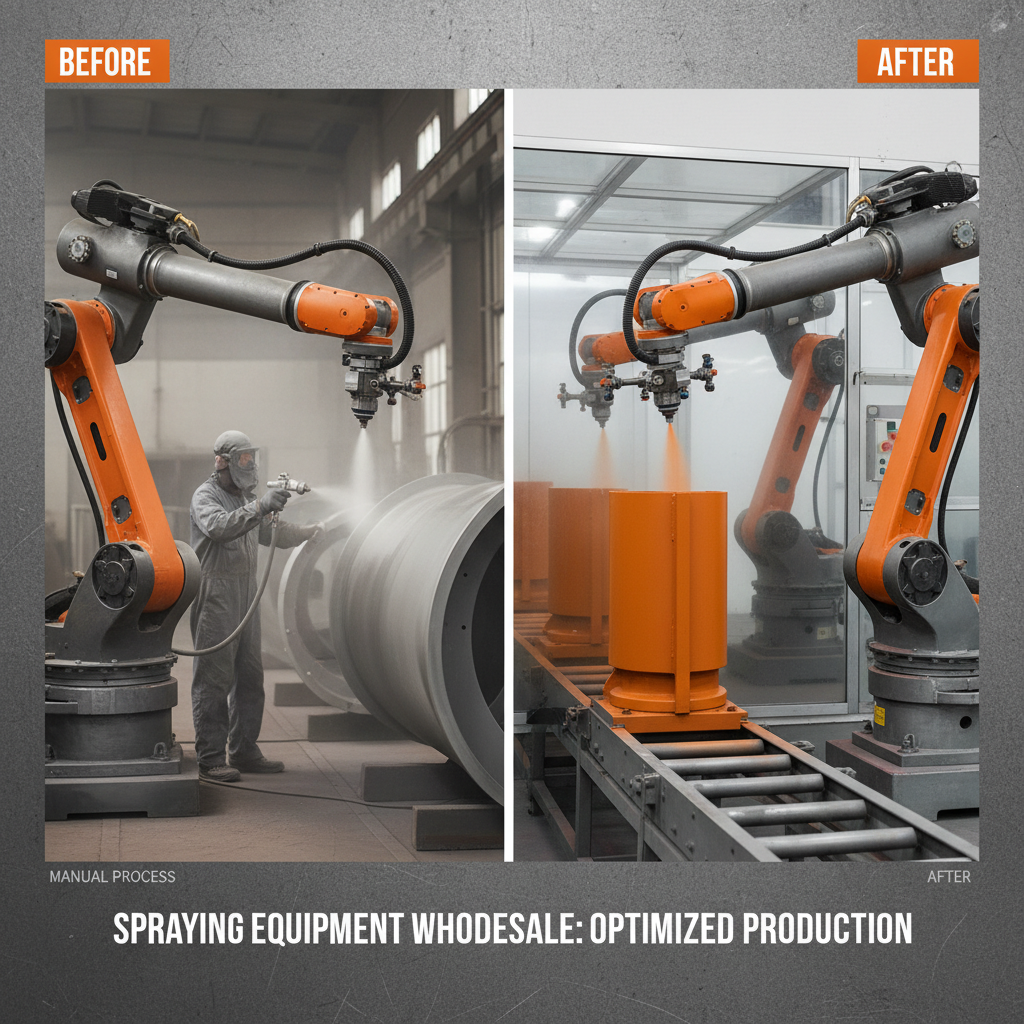
Automatic paint spraying robots are revolutionizing industries worldwide, offering unprecedented levels of efficiency, precision, and safety in coating applications. From automotive manufacturing to aerospace engineering and beyond, these advanced systems are transforming how surfaces are treated and protected. This technology addresses a critical need for consistent quality, reduced material waste, and improved worker safety in a globalized manufacturing landscape. Understanding the intricacies of automatic paint spraying robot technology is crucial for businesses seeking to optimize their processes and maintain a competitive edge.
The increasing demand for high-quality finishes, coupled with growing concerns regarding environmental sustainability and worker well-being, is driving the adoption of automatic paint spraying robots. Traditional painting methods often suffer from inconsistencies, over-spray, and exposure to hazardous materials. These robots mitigate these issues, delivering a more controlled and environmentally responsible approach. The global market for industrial robots, including those dedicated to painting, is experiencing substantial growth, projected to reach billions of dollars in the coming years (source: International Federation of Robotics).
Furthermore, the versatility of these robots allows for adaptation to a wide range of materials, coatings, and application requirements, making them a valuable asset across various industries. As technology advances, automatic paint spraying robots are becoming increasingly accessible and cost-effective, empowering both large corporations and small to medium-sized enterprises to benefit from their capabilities.
Introduction to Automatic Paint Spraying Robots
Automatic paint spraying robots represent a significant leap forward in automation technology, specifically designed to apply coatings to various surfaces with unmatched precision and efficiency. These systems utilize advanced robotics, software, and sensor technologies to replicate and often surpass the quality of human painting, while drastically reducing costs and minimizing environmental impact. The use of an automatic paint spraying robot is becoming increasingly prevalent across numerous industries.
These robots aren’t simply replacing human painters; they are enabling entirely new possibilities in coating application. Complex geometries, intricate designs, and large-scale projects that were previously time-consuming and costly are now achievable with greater ease and accuracy. This leads to shorter lead times, reduced material waste, and improved product quality, directly contributing to increased profitability and customer satisfaction.
Defining Automatic Paint Spraying Robotics
An automatic paint spraying robot is a programmable robotic arm equipped with specialized spray nozzles and control systems, designed to autonomously apply paint, coatings, or other liquids to a specified surface. Unlike manual painting, which relies on human skill and consistency, these robots deliver a uniform and precise coating every time, reducing variations and defects. This technology commonly incorporates features such as electrostatic charging, atomization control, and path planning algorithms.
The core of an automatic paint spraying robot lies in its ability to execute pre-programmed or dynamically adjusted spray paths. This is facilitated by sophisticated software and sensors that monitor the target surface, adjust spray parameters (flow rate, pressure, angle), and ensure complete coverage. The connection to modern industry is direct: enhancing production efficiency, reducing waste, and improving the overall quality of manufactured goods.
Furthermore, the integration of automatic paint spraying robots aligns with the growing need for sustainable manufacturing practices. By minimizing overspray and reducing the use of volatile organic compounds (VOCs), these systems contribute to a cleaner and healthier work environment. This directly supports global initiatives focused on environmental protection and responsible industrial practices.
Core Components and Functionality
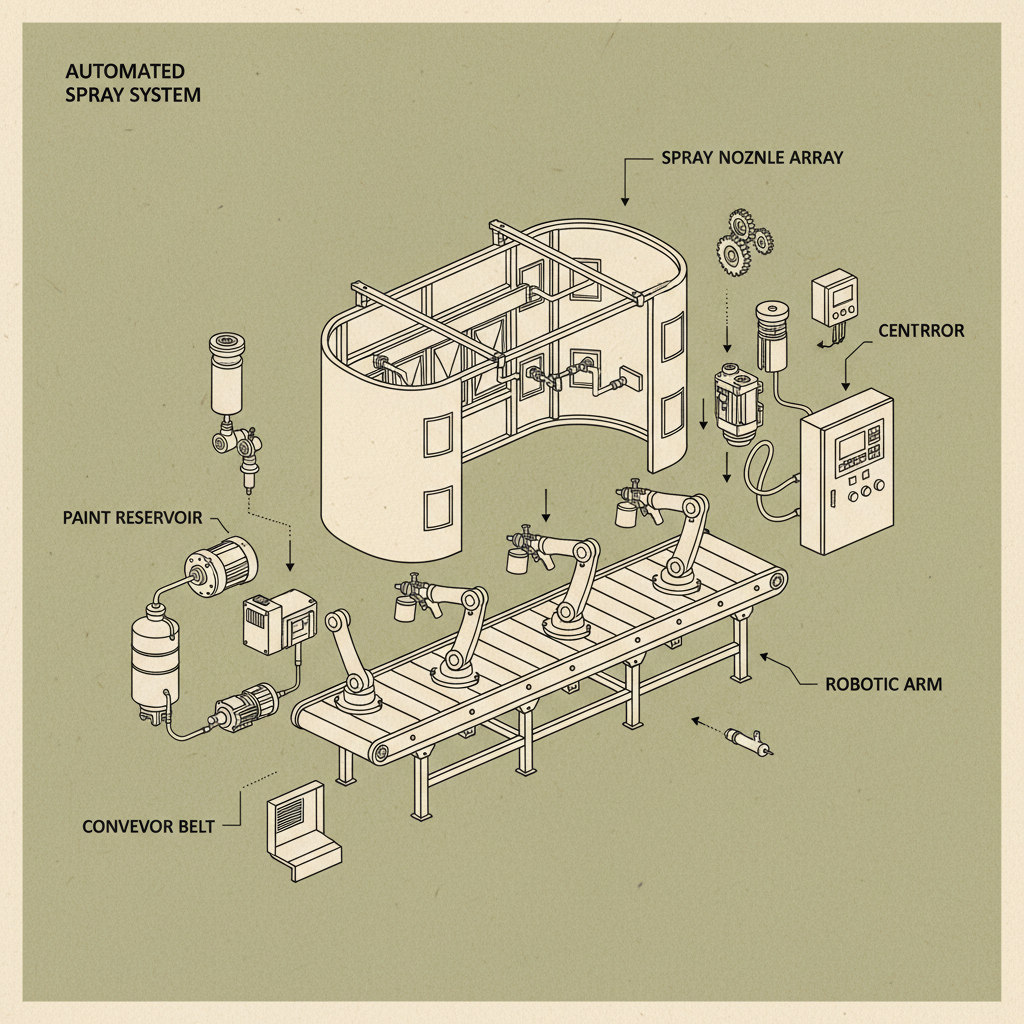
Several key components contribute to the functionality of an automatic paint spraying robot. These include the robotic arm itself, the spray gun (often electrostatic), a control system (PLC or dedicated robot controller), sensors (vision systems, proximity sensors, force sensors), and a coating supply system. Each component plays a critical role in ensuring precise and reliable application. The automatic paint spraying robot's effectiveness is heavily reliant on the synergy of these parts.
The robotic arm provides the physical dexterity to reach all surfaces of the target object. The spray gun generates and delivers the coating material, often utilizing electrostatic charging to improve transfer efficiency and reduce waste. The control system manages the robot's movements, spray parameters, and sensor data. Sensors provide feedback to the control system, allowing for real-time adjustments and ensuring consistent application quality.
Functionally, these robots operate through a sequence of programmed movements and actions. The process typically begins with a pre-programmed path definition, followed by calibration and testing. During operation, the robot systematically moves along the defined path, applying the coating material with precise control. Data logging and analysis capabilities allow for continuous improvement and optimization of the spraying process.
Key Performance Indicators of Automatic Paint Spraying Robots
Evaluating the performance of automatic paint spraying robots requires considering several key performance indicators (KPIs). These metrics help businesses assess the effectiveness of the technology and identify areas for improvement. Important KPIs include paint transfer efficiency, coating thickness uniformity, cycle time, material consumption, and defect rate.
Tracking these KPIs provides valuable insights into the robot’s operational effectiveness. For example, higher paint transfer efficiency means less waste and lower material costs. Uniform coating thickness ensures consistent product quality and durability. Shorter cycle times increase production throughput. Lower defect rates reduce rework and scrap.
Automatic Paint Spraying Robot Performance Comparison
Global Applications and Industry Integration
Automatic paint spraying robots are deployed across a diverse range of industries globally. The automotive sector is a major adopter, utilizing these robots for coating car bodies, parts, and components. The aerospace industry employs them for applying protective coatings to aircraft structures. Other key industries include furniture manufacturing, electronics, and general industrial coating applications.
In regions like Germany, Japan, and the United States, where advanced manufacturing is prevalent, the adoption of automatic paint spraying robot technology is particularly high. However, emerging economies are also rapidly increasing their investment in automation, driving growth in demand for these systems.
Advantages and Long-Term Value Proposition
The advantages of implementing automatic paint spraying robots are multifaceted. Cost savings are realized through reduced material waste, lower labor costs, and increased production efficiency. Sustainability is enhanced by minimizing VOC emissions and optimizing material usage. Worker safety is improved by eliminating exposure to hazardous chemicals. Product quality is consistently high due to precise application control.
The long-term value proposition extends beyond immediate cost reductions. Increased throughput, improved product quality, and enhanced worker safety contribute to a stronger competitive position. The ability to handle complex geometries and intricate designs opens up new product development opportunities. Furthermore, the data logging and analysis capabilities of these systems provide valuable insights for continuous improvement and process optimization.
The reliability and precision afforded by these robots builds trust with customers, ensuring consistently high-quality products. This leads to increased customer satisfaction and brand loyalty. Investing in automatic paint spraying robotics is not merely adopting a technology; it's investing in a future of efficient, sustainable, and high-quality manufacturing.
Future Trends in Automatic Paint Spraying Robotics
The future of automatic paint spraying robotics is characterized by continued innovation and integration with emerging technologies. Artificial intelligence (AI) and machine learning (ML) are being incorporated to optimize spray paths, predict maintenance needs, and adapt to changing conditions. Collaborative robots (cobots) are gaining traction, enabling humans and robots to work side-by-side safely and efficiently.
Developments in coating materials, such as self-healing coatings and environmentally friendly formulations, are driving demand for more sophisticated application technologies. Integration with digital twin technology allows for virtual simulation and optimization of the painting process. Sustainable solutions, including water-based coatings and powder coating applications, are becoming increasingly important as businesses prioritize environmental responsibility.
The convergence of these trends promises to deliver even more efficient, sustainable, and intelligent automatic paint spraying solutions. This will further empower businesses to enhance their competitiveness, reduce their environmental footprint, and deliver superior products to market.
Core Challenges and Solutions in Implementing Automatic Paint Spraying Robotics
| Challenge |
Impact on Automatic Paint Spraying Robot Performance |
Potential Solution |
Implementation Cost (1-10) |
| Initial Investment Cost |
High upfront expense can deter smaller businesses. |
Leasing options, phased implementation, government incentives. |
7 |
| Integration Complexity |
Integrating robots with existing production lines can be challenging. |
Standardized interfaces, experienced integrators, modular robot designs. |
6 |
| Programming and Training |
Requires skilled personnel for robot programming and operation. |
User-friendly programming interfaces, comprehensive training programs, remote support. |
5 |
| Maintenance and Downtime |
Unexpected downtime can disrupt production schedules. |
Preventive maintenance schedules, remote diagnostics, readily available spare parts. |
4 |
| Material Compatibility |
Ensuring compatibility between the robot and various coating materials. |
Material testing, robotic arm material selection, optimized spray parameters. |
3 |
| Sensor Accuracy and Calibration |
Inaccurate sensors can lead to inconsistent coating application. |
Regular sensor calibration, high-quality sensors, advanced filtering algorithms. |
4 |
FAQS
The ROI for an automatic paint spraying robot typically ranges from 1 to 3 years, depending on factors like production volume, material costs, and labor rates. The primary drivers of ROI are reduced material waste (due to improved transfer efficiency), lower labor costs, increased production throughput, and enhanced product quality. Careful assessment of your specific needs and production environment is crucial for accurate ROI prediction.
Automatic paint spraying robots require regular maintenance, including cleaning, lubrication, and inspection of critical components. Preventive maintenance schedules should be established to minimize downtime. More complex repairs may require specialized technicians. Remote diagnostic capabilities can often identify potential issues before they lead to significant problems.
Most automatic paint spraying robots are designed to handle a wide range of paint types, including water-based, solvent-based, and powder coatings. However, specific compatibility should be verified with the robot manufacturer. Adjustments to spray parameters and nozzle configurations may be necessary to optimize performance for different materials.
Safety is paramount. Automatic paint spraying robots typically incorporate multiple safety features, including light curtains, safety scanners, emergency stop buttons, and physical barriers. These features are designed to prevent accidental contact between humans and the robot, ensuring a safe working environment. Compliance with relevant safety standards (e.g., ISO 10218) is essential.
The integration timeline varies depending on the complexity of the existing production line and the specific robot configuration. A typical integration project can take anywhere from a few weeks to several months. Careful planning, experienced integrators, and thorough testing are crucial for a smooth and efficient implementation process.
Operators require comprehensive training on robot programming, operation, and basic maintenance procedures. Training programs should cover safety protocols, troubleshooting techniques, and data analysis. The level of training will vary depending on the operator's responsibilities and the complexity of the robotic system.
Conclusion
Automatic paint spraying robots are transforming the landscape of coating applications across a multitude of industries. Offering significant advantages in terms of efficiency, quality, sustainability, and safety, these technologies are becoming increasingly essential for businesses seeking to remain competitive in a globalized market. The ability to reduce material waste, lower labor costs, and consistently deliver high-quality finishes positions automatic paint spraying robot solutions as a strategic investment for long-term success.
Looking ahead, the integration of AI, machine learning, and collaborative robotics promises to further enhance the capabilities of these systems. By embracing these advancements, businesses can unlock new levels of automation, optimize their processes, and drive innovation. We encourage you to explore the possibilities of automatic paint spraying robotics and discover how they can benefit your organization. Visit our website today: www.yeedtech.com