Operation Specification Training for Spray Painting Line Workers
In the modern industrial landscape, the shift from manual, labor-intensive processes to automated, intelligent systems is not just an upgrade—it is a revolution. At the forefront of this transformation in the steel fabrication sector is Yeed Tech Co., Ltd., an emerging technology enterprise dedicated to intelligent solutions for steel structure production processes. The company has developed a series of new processing equipment that integrates automation, intelligence, integration, and safety to replace traditional manual labor in cutting, forming, welding, and steel structure painting. For workers operating these advanced systems, comprehensive training is no longer optional; it is the critical foundation for achieving the promised benefits of quality, efficiency, and safety. This article outlines the core components of operation specification training for personnel working on Yeed Tech's sophisticated painting systems.
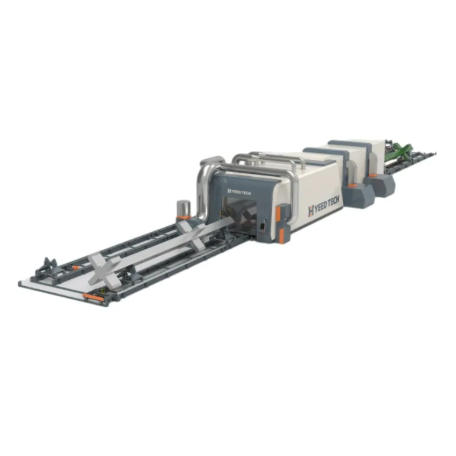
Foundations of the Modernized Spray Painting Line
- Understanding the Substrate:Training must begin with the product itself. Workers need a fundamental understanding of steel structure painting requirements, including surface preparation standards, the importance of primer adhesion, and the environmental conditions (temperature, humidity) that affect coating performance.
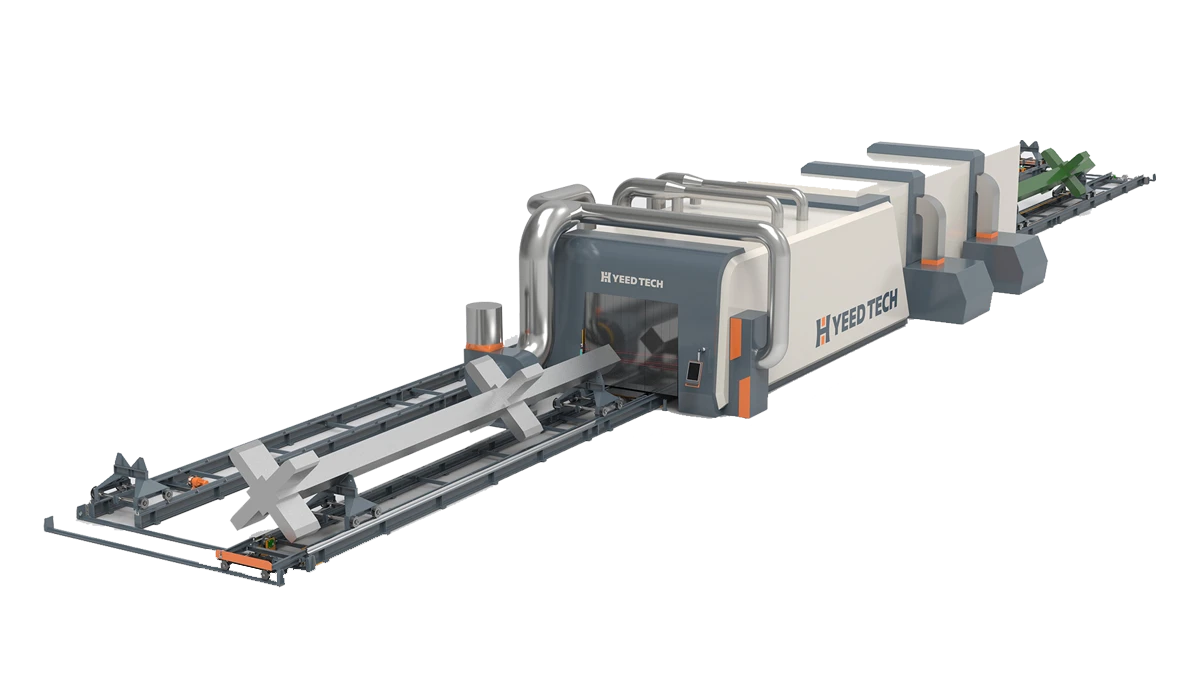
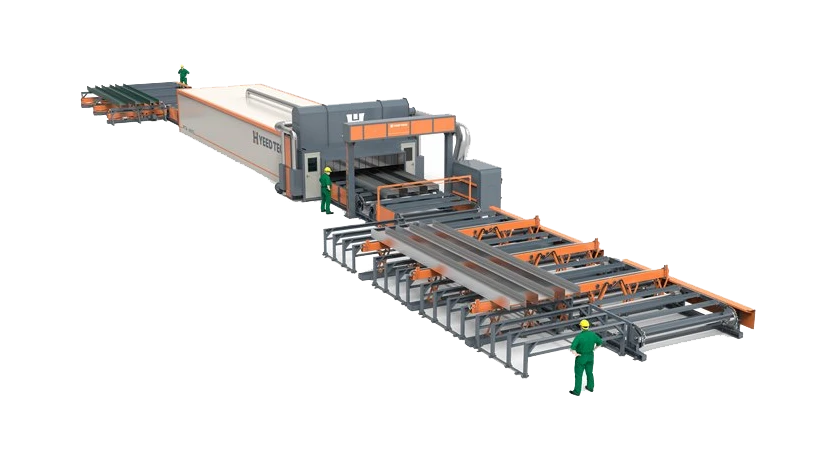
- System Overview:Operators are introduced to the complete spray painting line This includes the conveyor system, pre-treatment stages (cleaning, drying), the central automatic painting line enclosure, and the curing ovens. Understanding how each segment interacts is crucial for smooth workflow.
- Safety as a Prerequisite:Before touching any control, intensive safety training is mandated. This covers hazardous material (paint, solvent) handling, personal protective equipment (PPE) protocols, lockout-tagout (LOTO) procedures for maintenance, and emergency response measures specific to the automated cell.
Mastering the Automated Painting Line System
- Core Technology Familiarization:This module delves into the heart of Yeed Tech's innovation. Trainees learn about the device's automatic scanning system, which can intelligently identify the three-dimensional structure of components in all directions through 3D scanning, preparing for painting. Understanding this intelligent identification is key to trusting the system's precision.
- Control Console Proficiency:Workers are trained on the human-machine interface (HMI) or control software. This involves loading painting programs, inputting parameters for different components, monitoring system status (pressure, flow, fan speed), and pausing or queuing jobs without disrupting the entire spray painting line.
- Maintenance of Critical Components:Specification training includes routine upkeep tasks. This covers the proper maintenance of spray nozzles, filters, pumps, and the exhaust system for welding and cutting smoke control, ensuring consistent performance and longevity of the automatic painting line.
Operational Protocols and Workflow Integration of Spray Painting Line
- Pre-Operation Checklists:Workers are drilled in systematic pre-start checks. This includes verifying paint levels and viscosity, ensuring the robotic arm's path is clear, confirming scanner calibration, and checking that all safety guards are in place on the spray painting line.
- Quality Monitoring During Operation:While the system is autonomous, trained operators are its overseers. They learn to spot-check coated components for uniformity, monitor for any anomalies in the robot's movement pattern, and understand the data readouts from the system to preempt potential quality issues in steel structure painting.
- Response to Common Alerts:Training simulates responses to system alerts, such as a paint supply interruption, a conveyor jam, or a scanner fault. The protocol emphasizes structured troubleshooting—diagnosing via the HMI first—before any physical intervention.
FAQs about Automatic Painting Lines
What are the primary advantages of this automatic painting line compared to our old manual process?
This system solves the historical problems of high labor intensity, low efficiency, large crew sizes, unstable coating quality, poor uniformity, and significant paint waste inherent in manual spraying. It delivers low labor requirements, high spraying efficiency, excellent and consistent spraying quality, uniform coating, and paint savings, achieving an optimal balance between quality, output, and cost.
How does the system ensure consistent quality on complex steel structure painting projects?
The integrated automatic 3D scanning system is the key. It intelligently identifies the component's full geometry before painting begins. This data allows the robotic painting system to precisely calculate the spray path, distance, and angle for every surface, ensuring complete, even coverage regardless of the beam or column's shape, which is a breakthrough in the steel component painting industry.
What is the required skill shift for a worker moving from a manual spray painting line to this automated one?
The skill set shifts from physical spray gun technique to technological oversight and analytical problem-solving. The worker becomes a system operator and monitor, requiring proficiency in computer-based controls, basic mechanical and electrical troubleshooting, and a data-driven approach to quality assurance rather than relying on manual dexterity.
Can the automatic painting line handle all the different sizes and profiles we produce?
Yes, the system is designed for high-variability production. The 3D scanning and programmable robotic arms allow for rapid changeovers. For each new component profile, a specific painting program can be loaded or created, making the spray painting line highly flexible and suitable for the batch production of diverse steel structures.
What are the most critical daily maintenance tasks to keep the spray painting line running optimally?
The five most critical daily tasks are: verifying and cleaning the scanning system lenses to ensure accurate component recognition, checking and cleaning spray nozzle tips to prevent clogging and ensure fan pattern quality, draining moisture from the air supply filters, confirming proper paint viscosity through measurement, and performing a visual inspection of the robotic arm's movement range for any obstructions.
For Yeed Tech Co., Ltd., the development of intelligent spray painting line solutions represents a commitment to elevating the entire steel structure painting industry. However, the full potential of this advanced automatic painting line technology is only unlocked through comprehensive, specification-driven training. Such training transforms the workforce from manual laborers into skilled technologists—operators who ensure safety, maximize uptime, and guarantee the superior quality and efficiency the system is engineered to deliver. In essence, the human expertise in managing, monitoring, and maintaining these intelligent systems remains the indispensable component in the automated future of industrial painting.
Latest News
-
Efficient automated hot air drying equipment for steel structure application
NewsApr.16,2026 -
Efficient hot air drying system for steel structure spraying line
NewsApr.09,2026 -
Optimizing Steel Structure Spraying with Hot Air Drying Technology Solutions
NewsApr.07,2026 -
HighEfficiency Hot Air Drying Painting Equipment for Superior Industrial Coatings
NewsApr.04,2026 -
Optimizing Industrial Processes with Hot Air Furnace Heating Spraying Systems
NewsMar.31,2026 -
Comprehensive Tailormade Steel Structure Spraying Solution for Enhanced Durability
NewsMar.28,2026 -
Optimizing Steel Structure Protection through Customization and Integration of Spraying System
NewsMar.26,2026