Comparing Container Lifting Jacks Options: Specifications, Materials and Supplier Documentation
SIDE BY SIDE
Comparing Container Lifting Jacks Options: Specifications, Materials and Supplier Documentation
Procurement teams evaluating container lifting jacks face a choice between standard and industrial-grade configurations for load capacity, lifting mechanism, control system, container compatibility, space design and cost position versus traditional crane and forklift alternatives.

Container Lifting Jacks — standard catalogue variant (ref-1)
Industrial Container Lifting Jacks — industrial/hot-products variant (ref-2, ref-3, ref-4, ref-5, ref-6)
Why This Comparison Matters
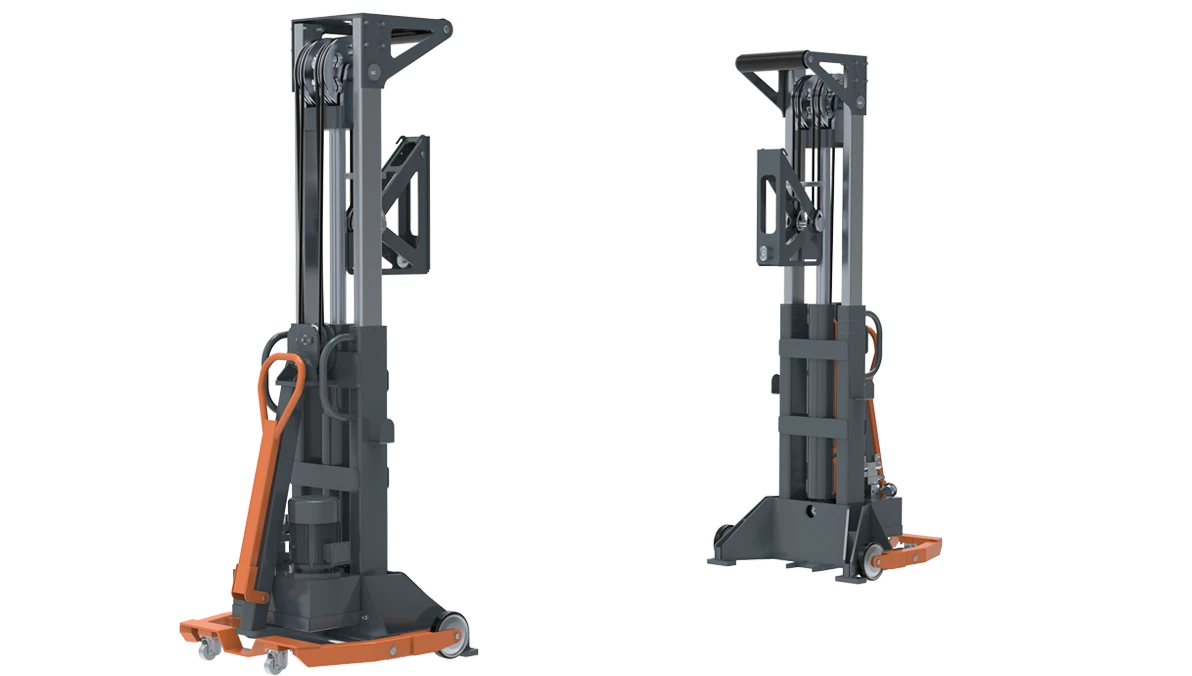
For factories, warehouses and logistics enterprises managing low to medium container throughput, hydraulic lifting jacks have become a practical alternative to crane rentals and forklift-heavy operations. Yeed Tech Co.,Ltd. offers two primary configurations: a standard Container Lifting Jacks set and an Industrial Container Lifting Jacks variant. Both share a core hydraulic architecture, yet there are differences in parameter detail, clamping design emphasis and feature scope that matter when selecting a solution for a specific site.
Subjects Under Comparison
| Container Lifting Jacks | Industrial Container Lifting Jacks | |
|---|---|---|
| Product line | Standard / core catalogue | Hot Products / industrial grade |
| Product page | View product | View product |
Criterion 1 — Load Capacity
Standard variant: Each of the four hydraulic devices lifts 8 T individually, giving a combined total of 32 T per set. The units can operate synchronously or independently.
Industrial variant: 8 T per single unit and 32 T total system capacity for a four-unit set. Synchronous and individual lifting modes are available.
Position: Both configurations carry identical stated ratings — 8 T per unit, 32 T total. No documented capacity advantage exists for either variant.
Criterion 2 — Lifting Mechanism
Standard variant: Described as an electric hydraulic device. A top roller fitted to the upper clamping section assists the slide motion during lifting.
Industrial variant: All industrial records specify an electric hydraulic mechanism. Several records add language around "advanced hydraulic synchronization" and "high-precision hydraulic lifting technology," and each mentions the top roller assist device.
Position: Both use an electric hydraulic mechanism with a top roller assist. Industrial records include more descriptive engineering language; whether this reflects a physical difference is not verifiable from published documentation alone.
Criterion 3 — Control System
Standard variant: A remote control enables the operator to adjust each lifting platform separately and observe status during the operation.
Industrial variant: All industrial records list remote control operation as the control method, with individual-platform adjustment and real-time status monitoring consistently described. One record refers to a "wireless remote control" in its advantages section.
Position: Both have remote control with per-platform adjustment.
Criterion 4 — Container Compatibility and Clamping
Standard variant: A corner fitting clamping device locks with "conventional container models on the market." The upper card slot is height-adjustable to accommodate different container sizes, and a quick-connect plug-and-play interface is specified.
Industrial variant: All industrial records document corner fitting compatibility with "standard international containers" or "standard container corner fittings." One record describes compatibility with "almost all conventional container models available on the global market." Height-adjustable upper card slots and plug-and-play quick connect are consistent across records.
Position: Both configurations document corner fitting compatibility and adjustable slots. Industrial records use broader compatibility language. Neither provides a tested container type list for independent verification.
Criterion 5 — Space Optimization and Portability
Standard variant: Foldable arm rests are noted for space saving and collision reduction. The documentation explicitly states that a forklift or similar auxiliary tool is required to reposition the equipment.
Industrial variant: Foldable arm rests appear across all industrial records. Multiple records describe the compact footprint as suited to high-density warehouse layouts, and forklift-assisted relocation is noted in deployment and FAQ sections.
Position: Both share the foldable arm rest design and forklift-dependent portability. The standard record is more explicit about the auxiliary tool requirement; industrial records mention it in context.
Criterion 6 — Cost Position vs. Traditional Alternatives
The comparison is between hydraulic lifting jacks and traditional crane or forklift hire:
| Metric | Traditional Crane / Forklift | Hydraulic Lifting Jacks |
|---|---|---|
| Initial investment | Extremely high | Low to moderate |
| Operating cost | High (fuel / rental) | Minimal (electric) |
| Labor requirement | Specialized operators | Simple training |
| Setup time | Lengthy deployment | Rapid plug-and-play |
| Space requirement | Large clearance area | Compact and foldable |
Position: The cost-justification framework is more extensively documented in the industrial variant's supplier materials. Procurement teams requiring a formatted cost comparison for internal approval will find more direct support in those records.
Side-by-Side Summary
| Criterion | Container Lifting Jacks (Standard) | Industrial Container Lifting Jacks |
|---|---|---|
| Single unit capacity | 8 T | 8 T |
| Total system capacity | 32 T | 32 T |
| Lifting mechanism | Electric hydraulic | Electric hydraulic |
| Control mode | Remote control | Remote control |
| Corner fitting compatibility | Conventional models | Standard / global models |
| Upper card slot | Height-adjustable | Height-adjustable |
| Top roller assist | Documented | Documented |
| Foldable arm rests | Documented | Documented |
| Repositioning method | Forklift required (explicit) | Forklift noted in docs |
| Structured cost table | Not published | Published in multiple records |
| Lifting modes | Synchronous / individual | Synchronous / individual |
Selecting the Right Configuration
Based solely on published documentation, the mechanical specifications—load capacity, hydraulic mechanism, control mode and clamping type—are consistent across both configurations. Documented distinctions that may influence procurement decisions include:
- Structured parameter tables for technical procurement paperwork: present in the industrial product records.
- Formatted investment return tables for internal cost justification: documented in industrial records; standard record covers the same points in narrative form.
- Concise supplier overview: the standard Container Lifting Jacks record provides a clear summary suitable for initial evaluation.
Configuration names alone are not sufficient grounds for selection. Buyers should request complete technical documentation, safety compliance records and factory test reports directly from Yeed Tech Co.,Ltd. before finalizing any purchasing decision, as these details are not fully covered by the published product pages reviewed here.
About the Supplier
Yeed Tech Co.,Ltd. is an emerging technology enterprise focused on intelligent industrial production solutions. Its range of container lifting jacks is positioned for factories, warehouses and enterprises handling low to medium throughput. Prospective buyers should contact Yeed Tech Co.,Ltd. directly to confirm current product availability, site requirements and full documentation packages.
THE PEOPLE

About the author
THE COMPANY
Yeed Tech Co.,Ltd.
Yeed Tech Co., Ltd. is an emerging technology enterprise dedicated to intelligent solutions for steel structure production processes. The company has developed a series of new processing equipment that integrates automation, intelligence, integration, safety, and automation to replace traditional manual labor in the production process of steel structures, including cutting, forming, welding, and painting.The main product lines currently on the market include: intelligent spraying lines for steel components,…
About Us ↗Visit company website ↗YOUR NEXT STEP
Bring your brief. Start a useful conversation.
Use case, specification, quantity and delivery window: make the next conversation specific.
Latest News
-
Steel Structure Painting Questions for Heavy Component Lines
NewsNov.02,2026 -
Choosing a Welding Fume Extraction Arm: Application Fit and Specification Checks
NewsOct.22,2026 -
Industrial Storage Guide for Large Steel Shed and Efficiency
NewsJul.01,2026 -
Analyzing RSJ Beam Cost and Structural Steel Investment Guide
NewsJun.29,2026 -
High Performance Industrial Steel Huts for Durable Storage
NewsJun.27,2026 -
Automated Painting Solutions for Superior Steel Buildings
NewsJun.26,2026 -
Top Light Gauge Steel Framing Manufacturers for Quality Construction
NewsJun.25,2026