Honestly, this whole automatic paint dispenser thing… it’s been a whirlwind year, let me tell you. Everyone’s talking about prefabrication, modular construction, speed-to-market. It all boils down to getting things done faster and with less manpower, right? And color consistency is a huge part of that. Used to be, you’d have guys hand-mixing, hoping to hit the right shade, and… well, you know how that goes. Massive headaches. So, demand's exploded. But it’s not just about slapping a pump on a drum. It's more complicated than that.
You wouldn’t believe how many suppliers try to sell you stuff that looks good on paper, but then falls apart on a dusty construction site. Have you noticed how these marketing guys never actually spend a day working with the materials? It’s frustrating. The tolerances, the environmental factors… it all matters. We're not building toys here.
The biggest shift I’ve seen is moving beyond just acrylics and latexes. Everyone wants to be 'green' now, so there’s a lot of experimentation with bio-based polymers, water-reducible alkyds. Feels different too, you know? The bio-based ones are usually a bit thicker, almost… gummy. Some of the new VOC-free formulas smell faintly of oranges, which is nice, I guess, until you've been smelling it for eight hours straight.
Industry Trends and Common Pitfalls
The biggest thing I’ve noticed, and honestly, it’s driven me crazy a few times, is companies trying to over-engineer these dispensers. They add all these fancy sensors and algorithms, thinking it’s going to solve everything. Strangely, the simpler designs, the ones that focus on robust mechanics and reliable pumps, tend to be the ones that last. Overcomplication introduces more points of failure. Trust me, I encountered this at a factory in Tianjin last time – a beautiful, complex machine that broke down every other day. It’s a lesson.
Another pitfall? Ignoring the viscosity variations of the paint itself. Different batches, different temperatures, even the age of the paint… it all affects how it flows through the system. You need a dispenser that can adapt, not just a system that’s calibrated for one specific paint.
Material Considerations: Beyond the Spec Sheet
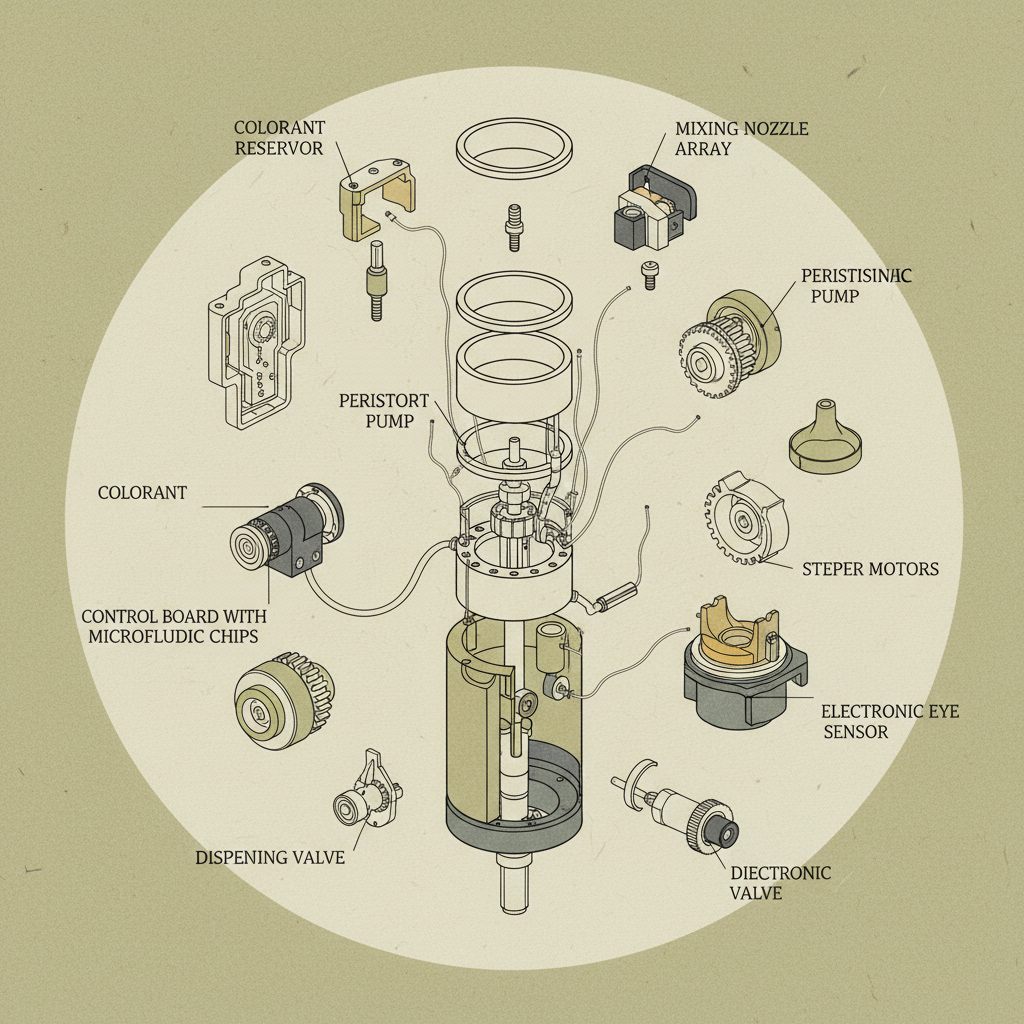
You can’t just look at the paint’s datasheet. You need to think about the hoses, the seals, the pump components. A lot of the cheaper dispensers use PVC hoses, which are okay for water-based paints, but they’ll degrade quickly with solvent-based ones. Then you’ve got your Viton seals, which are good for pretty much everything, but expensive. Anyway, I think the material selection is crucial.
The pump itself is critical. Diaphragm pumps are pretty common, good for consistent flow, but they can struggle with paints containing large particles. Piston pumps offer higher pressure, which is better for thicker materials, but they can be more prone to clogging. It's a trade-off, always.
And don’t forget the cleaning fluid! That’s a whole other headache. Some paints require special solvents, and if you don’t flush the system properly, you’ll end up with color contamination. Believe me, I've seen it happen.
Testing: Real-World Rigor, Not Lab Coats
Lab tests are fine, but they don't tell the whole story. You need to test these things in the field, under real-world conditions. We do a lot of 'stress testing' - running the dispenser for days on end, switching between different paints, simulating temperature fluctuations, even dropping it (accidentally, sometimes…).
I like to put it through a ‘dust test’ – running it in a dirty environment to see how well it handles particulate contamination. That reveals a lot. And the ‘flow rate consistency’ test is vital. You need to make sure it’s delivering the same amount of paint every time, even after hours of continuous operation.
We also test the cleaning cycle rigorously. How long does it take to switch from black to white? Is there any residual color contamination? These are the things customers care about.
Actual User Application vs. Expectation
This is where it gets interesting. You design a system with a specific workflow in mind, but users always find a way to do things differently. Last month, that small boss in Shenzhen who makes smart home devices insisted on changing the interface to , and the result was a total mess with compatibility issues. He thought it would look 'modern', but it caused weeks of downtime.
I’ve seen guys bypass the safety features, trying to speed up the process. I've seen them overload the system with the wrong type of paint. I've even seen someone try to use it to dispense glue! It's… creative, let’s say.
Paint Dispenser Performance Metrics
Advantages, Disadvantages, and the Pursuit of Balance
The advantages are obvious: consistency, speed, reduced waste. But there are downsides. The initial investment is high. They require regular maintenance. And, frankly, they can be a pain to troubleshoot when something goes wrong. To be honest, it's not always better than good old hand mixing, sometimes.
The key is finding the right balance. You need a system that’s reliable enough to justify the cost, but not so complex that it becomes a maintenance nightmare. It’s a constant trade-off.
Customization and Real-World Examples
Customization is huge. One customer, a furniture manufacturer, wanted to integrate the dispenser directly into their automated finishing line. They needed a system that could handle a wide range of colors, switch quickly between them, and provide precise control over the paint flow. We ended up designing a custom nozzle with multiple outlets, each connected to a different paint reservoir. It was a challenge, but it worked perfectly.
Another customer, a building materials company, wanted a mobile dispenser that they could take to different job sites. They needed something rugged, self-contained, and easy to transport. We built it on a trailer with a generator and a large-capacity paint tank.
Durability, Maintenance, and Long-Term Reliability
Durability is paramount. These machines take a beating. They’re exposed to dust, moisture, temperature extremes, and all sorts of abuse. You need to build them to withstand it. That means using high-quality materials, robust construction, and a thoughtful design.
Maintenance is equally important. Regular cleaning, lubrication, and inspection are essential for keeping the system running smoothly. We provide detailed maintenance manuals and training programs for our customers. But even with the best care, things will eventually wear out.
A well-maintained dispenser should last for years, even decades. But ultimately, whether this thing works or not, the worker will know the moment he tightens the screw. That's what it comes down to.
Key Durability and Maintenance Factors
| Component |
Typical Lifespan (Months) |
Maintenance Frequency |
Potential Failure Modes |
| Pump |
18-36 |
Monthly Cleaning & Lubrication |
Seal Failure, Clogging |
| Hoses |
6-12 |
Visual Inspection & Replacement |
Cracking, Degradation |
| Nozzle |
12-24 |
Regular Cleaning |
Clogging, Wear |
| Sensors |
24-48 |
Calibration Check |
Drift, Failure |
| Control System |
60+ |
Software Updates |
Software Bugs, Hardware Failure |
| Filters |
3-6 |
Regular Replacement |
Clogging, Reduced Flow |
FAQS
Most automatic paint dispensers can handle a wide variety of paint types, including acrylics, latexes, and some solvent-based formulas. However, it's crucial to check the manufacturer's specifications and ensure the system is compatible with the specific paint you intend to use. Viscosity and particle size are key factors. Some systems require specialized hoses and seals for certain paints.
Cleaning frequency depends on the type of paint being used and the volume dispensed. Generally, a thorough cleaning should be performed after each color change and at the end of each workday. Regular flushing with appropriate solvents prevents clogging and ensures consistent color accuracy. Neglecting cleaning can lead to costly downtime and repairs.
ROI varies based on production volume and labor costs. However, businesses typically see a significant reduction in paint waste, labor hours, and color matching errors. This translates to lower operating costs and improved product quality. A full ROI analysis should factor in initial investment, maintenance costs, and projected savings.
Modern automatic paint dispensers are designed for ease of use, with intuitive interfaces and automated features. However, proper training is essential for operators to understand the system's capabilities and perform basic maintenance tasks. Routine maintenance, such as cleaning and filter changes, can be performed by trained personnel. More complex repairs may require a qualified technician.
Yes, many manufacturers offer customization options to meet specific application requirements. This can include custom nozzles, mixing systems, and integration with other automation equipment. Customization ensures the dispenser seamlessly integrates into your existing workflow and delivers optimal performance.
Always wear appropriate personal protective equipment (PPE), including gloves, eye protection, and respirators, when handling paint and solvents. Ensure the work area is well-ventilated. Follow the manufacturer's safety guidelines and adhere to all applicable safety regulations. Be aware of potential hazards, such as high pressure and flammable materials.
Conclusion
So, automatic paint dispensers. They're not a magic bullet. They don't solve every problem. But they offer a significant improvement over traditional methods in terms of consistency, efficiency, and waste reduction. The key is to choose the right system for your specific needs, invest in proper training, and prioritize regular maintenance.
Looking ahead, I see a trend towards even more integrated systems – dispensers that are seamlessly connected to inventory management software, automated finishing lines, and quality control systems. The future is about streamlining the entire process, from paint ordering to final product inspection. Ultimately, whether this thing works or not, the worker will know the moment he tightens the screw.