Welding Boom Arm: Enhancing Industrial Safety and Efficiency Worldwide
Understanding the Welding Boom Arm: An Essential Industrial Tool
The welding boom arm — it's not something you hear about every day, but if you're familiar with industrial manufacturing or heavy fabrication, you know it’s vital. Globally, welding operations account for a significant slice of manufacturing, infrastructure development, and maintenance work. In fact, the World Bank reports rapid industrial growth in emerging markets, pushing demand for equipment that enhances safety and productivity — which is precisely what welding boom arms aim to do.
Why does understanding this tool matter? Beyond technical jargon, it provides insight into how industries optimize workflows, protect workers, and extend the lifespan of expensive machinery. Plus, it affects fields as diverse as shipbuilding, automotive plants, and even humanitarian engineering projects where precision and reliability count.
Introduction: The Global Industrial Context of Welding Boom Arms
According to the International Labour Organization, welding remains a top job function worldwide, with millions employed in sectors reliant on robust welding equipment. However, these processes come with challenges: cramped workspaces, repetitive strain injuries, and potential damage to hoses and cables from constant movement.
The welding boom arm directly addresses these concerns by providing articulated support for welding torches and cables, enabling greater freedom of movement and reducing fatigue. Oddly enough, despite such an evidently practical tool, adoption rates still fluctuate because of cost or lack of awareness — especially in developing regions where infrastructure projects are booming.
What is a Welding Boom Arm?
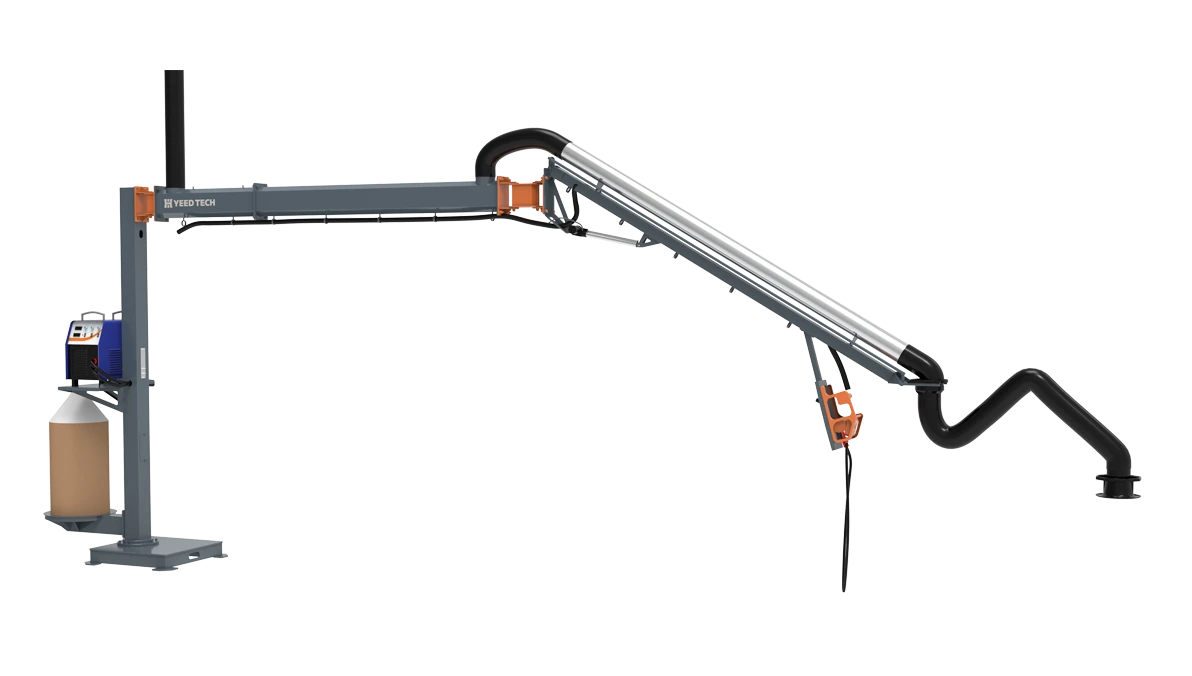
Simply put, a welding boom arm is a mechanical arm or fixture that holds welding equipment like torches, shielding gas lines, and power cables overhead or at a desired position so that welders can work more comfortably and safely. It’s kind of like an “invisible helper” that lifts the burden of managing cumbersome cables and equipment, allowing welders to focus solely on their craft.
In modern industry, such arms are connected to overhead cranes, factory ceilings, or vehicle-mounted frames, becoming indispensable in production lines requiring repetitive high-precision welds. They also find usage in humanitarian settings — for example, mobile repair units during disaster relief can use them to speed up rebuilding without exhausting technicians.
Core Components That Define Welding Boom Arms
1. Durability
Welding boom arms have to withstand intense heat, sparks, and constant movement. They’re usually made from steel or aluminum alloys treated to resist corrosion and wear. Durability ensures they last years in challenging factory environments.
2. Flexibility & Reach
The arms must allow for multi-directional movement with adjustable reach depending on workspace size. Usually, joints employ pivot points and springs or counterbalancing systems to maintain smooth, stable motions.
3. Load Capacity
A key factor is how much weight the boom arm can hold without sagging or losing control. This includes welding guns, hoses, and sometimes cooling equipment or lighting. Specifying the right load capacity is critical to safety and function.
4. Ease of Installation & Maintenance
Operators prefer arms that can be quickly mounted and require minimal upkeep. Modular designs and corrosion-resistant components help lower downtime.
5. Safety Features
Integrated cable management, spark shielding, and emergency release mechanisms reduce workplace incidents. These smaller details often make a huge difference in daily operations.
Specifications Table: Typical Welding Boom Arm Parameters
| Feature | Specification |
|---|---|
| Material | Aluminum Alloy / Steel |
| Load Capacity | 30-70 kg (66-154 lbs) |
| Reach Length | 3 to 7 meters |
| Rotation | 360° swivel at base |
| Mounting | Ceiling, Wall, or Overhead Crane |
| Safety Features | Cable management, Spark shields, Emergency release |
Global Applications and Use Cases
Welding boom arms are found worldwide in heavy industries. For example, shipyards in South Korea and Japan benefit from robust boom arms to streamline large assembly tasks, reducing downtime and protecting workers from repetitive strain.
In Europe, automotive manufacturers use them extensively in robotic welding cells, integrating them with automation for improved precision. Meanwhile, in oil and gas plants scattered across the Middle East, these arms help maintain constant welding quality despite grueling environmental conditions.
Oddly enough, NGOs involved in post-disaster relief sometimes incorporate portable welding boom arms in their mobile workshops, speeding up reconstruction efforts where traditional welding setups would be cumbersome and slow.
Vendor Comparison: Welding Boom Arms
| Vendor | Load Capacity | Customization Options | Price Range | Warranty |
|---|---|---|---|---|
| ArmTech Solutions | 50 kg | Length & Load Adjustment | $$$ | 3 Years |
| WeldEase Corp | 40 kg | Modular Joint Systems | $$ | 2 Years |
| FlexiHold Industries | 70 kg | Heavy Duty Models | $$$$ | 5 Years |
Advantages and Long-Term Value of Welding Boom Arms
First off, there’s a real cost-saving angle: fewer damaged cables and torches mean less frequent replacements. Then, there’s the ergonomics factor; welders report less fatigue which, frankly, translates to fewer errors and higher productivity. Safety improves, too — less tripping over cables or exposure to moving parts.
From a social standpoint, tools that improve worker welfare foster dignity and job satisfaction, a factor not always measured immediately but undoubtedly vital. Over time, companies investing in ergonomic solutions like welding boom arms gain reputations as responsible employers, often translating into better retention.
Future Trends: Innovation in Welding Boom Arms
The future is exciting here. With Industry 4.0, some manufacturers are integrating sensors and IoT technology to monitor arm positions and wear in real-time, allowing predictive maintenance. Materials are evolving as well; lighter carbon fiber composites are being tested to reduce arm weight without sacrificing strength.
Green energy and sustainability also influence designs—some arms now come with solar-powered assist motors to aid movement, reducing worker strain. Automation is growing too, with robotic welding boom arms taking on more complex manufacturing tasks.
Challenges and Expert Insights
No solution is perfect. Current challenges include initial investment cost and compatibility with existing factory layouts. Some older factories must retrofit ceilings or supports to mount these arms. Plus, if not properly maintained, joints can stiffen, hampering movement.
Experts advise careful site analysis before purchase and suggest modular systems to allow phased upgrades. Training welders on proper usage and quick maintenance tips can dramatically extend service life.
FAQ: Frequently Asked Questions About Welding Boom Arms
- Q: How do welding boom arms improve worker safety?
A: They reduce cable clutter and trip hazards by suspending cables overhead, and their positioning minimizes awkward postures, lowering injury risk. - Q: Can a welding boom arm be used outdoors?
A: Yes, but it should be made of corrosion-resistant materials and include weather-protective coatings to withstand the elements. - Q: How difficult is installation?
A: Typically straightforward if mounting structures are prepared; many models come with detailed instructions and support for ceiling or wall mounting. - Q: Do boom arms support robotic welding equipment?
A: Many models do, especially industrial-grade arms designed to handle heavier loads and integrate with automation systems. - Q: What maintenance does a welding boom arm require?
A: Regular lubrication of joints, inspection for wear, and checking of mounting fixtures keep the arm functioning smoothly and safely.
Conclusion
In real terms, welding boom arms aren’t just ‘nice-to-have’ tools; they are core assets that tie together safety, efficiency, and innovation in modern manufacturing. Their adoption parallels an industry that values worker welfare and technical precision equally. If you want to explore practical, reliable welding boom arms tailored to your needs, visit our website — it’s where efficiency meets safety.
Oddly enough, it feels like the small things — an adjustable arm here, a smooth swivel there — add up to a big leap in how welding works get done worldwide. Welding boom arms deserve their spot in the spotlight.
Mini takeaway: Welding boom arms exemplify how thoughtful engineering can support both people and production, keeping industries running strong and safely.
References:
1. International Labour Organization (ILO) - Welding in Industry
2. World Bank Reports on Industrial Growth
3. Wikipedia: Welding
Latest News
-
Efficient automated hot air drying equipment for steel structure application
NewsApr.16,2026 -
Efficient hot air drying system for steel structure spraying line
NewsApr.09,2026 -
Optimizing Steel Structure Spraying with Hot Air Drying Technology Solutions
NewsApr.07,2026 -
HighEfficiency Hot Air Drying Painting Equipment for Superior Industrial Coatings
NewsApr.04,2026 -
Optimizing Industrial Processes with Hot Air Furnace Heating Spraying Systems
NewsMar.31,2026 -
Comprehensive Tailormade Steel Structure Spraying Solution for Enhanced Durability
NewsMar.28,2026 -
Optimizing Steel Structure Protection through Customization and Integration of Spraying System
NewsMar.26,2026