Estimating the i beam price per meter often feels like a moving target for procurement managers and structural engineers due to the volatile nature of global steel markets. While the base cost of raw material is the primary driver, the final price is influenced by a complex web of metallurgical grades, flange dimensions, and the precision of the fabrication process.
In large-scale steel structure production, the cost of the beam itself is only one part of the equation. The true economic impact is realized when considering the integration of automated processing—such as intelligent spraying and cutting—which can significantly reduce the total cost of ownership by eliminating manual waste and improving coating longevity.
This analysis explores the variables affecting steel beam pricing and how modern automation technology, like those provided by YEED TECH, optimizes the lifecycle costs of heavy steel components from initial procurement to final painting.

Core Factors Driving Steel Beam Pricing Per Meter

The price of an I-beam per meter is not a fixed value but a result of several fluctuating variables. Primarily, the global price of hot-rolled steel dictates the baseline. However, the "per meter" calculation is essentially a proxy for weight; since steel is sold by the ton, the cross-sectional area of the beam determines how many kilograms are present in each meter, directly shifting the cost.
Beyond raw materials, the metallurgical grade plays a critical role. High-strength low-alloy (HSLA) steels command a premium over standard carbon steel due to their superior yield strength and corrosion resistance. Additionally, the finishing requirements—whether the beam is delivered "black," primed, or fully galvanized—add layers of cost that must be factored into the linear meter price.
Logistics and order volume also introduce significant variance. Bulk orders typically benefit from mill-direct pricing, whereas smaller quantities purchased through distributors include mark-ups for handling and storage. For companies integrating these beams into larger systems, the cost of the beam is inextricably linked to the efficiency of the fabrication line.
Understanding the Relationship Between Weight and Material Cost
To accurately calculate the cost of an I-beam, one must look at the linear weight. A larger flange width or a thicker web increases the mass per meter, which increases the cost even if the length remains the same. This makes the "price per meter" a variable that changes based on the specific beam size (e.g., W-shapes vs. S-shapes).
When evaluating costs, engineers must balance the initial purchase price against the total weight of the structure. Over-specifying the beam size leads to unnecessary expenditure and increases the energy required for transporting and lifting the components into place.
Furthermore, the precision of the beam's dimensions affects subsequent processes. In automated production environments, consistent tolerances are essential. Inconsistencies in beam dimensions can lead to gaps during the painting process, requiring more manual touch-ups and increasing the overall project cost despite a low initial material price.
Application Scenarios and Their Impact on Budgeting
The budgeting process for I-beams differs wildly depending on the end-use. In industrial warehouse construction, where standardized lengths are common, procurement focuses on volume discounts and standard carbon steel. In contrast, specialized infrastructure projects may require custom-tapered beams or specific alloys to withstand extreme environmental stress, driving the price per meter significantly higher.
For heavy steel structure painting lines, the geometry of the beam determines the complexity of the coating process. Beams with intricate attachments or brackets require more sophisticated scanning and spraying trajectories. This is where the "hidden cost" of the beam appears: the time and material wasted during manual painting of complex shapes.
In high-precision engineering, the focus shifts from the raw material cost to the cost of precision. Beams intended for automated assembly lines must meet strict flatness and squareness standards. While these may cost more per meter initially, they reduce the risk of assembly failure and lower the labor costs associated with forcing mismatched components to fit.
Analyzing Fabrication Efficiency and Cost Reduction
The economic value of a steel beam is maximized when the fabrication process is optimized. Many companies focus solely on the purchase price per meter, but the real savings occur during the processing stage—specifically in cutting and painting. Manual painting is notorious for high paint waste and inconsistent thickness, which can lead to premature corrosion.
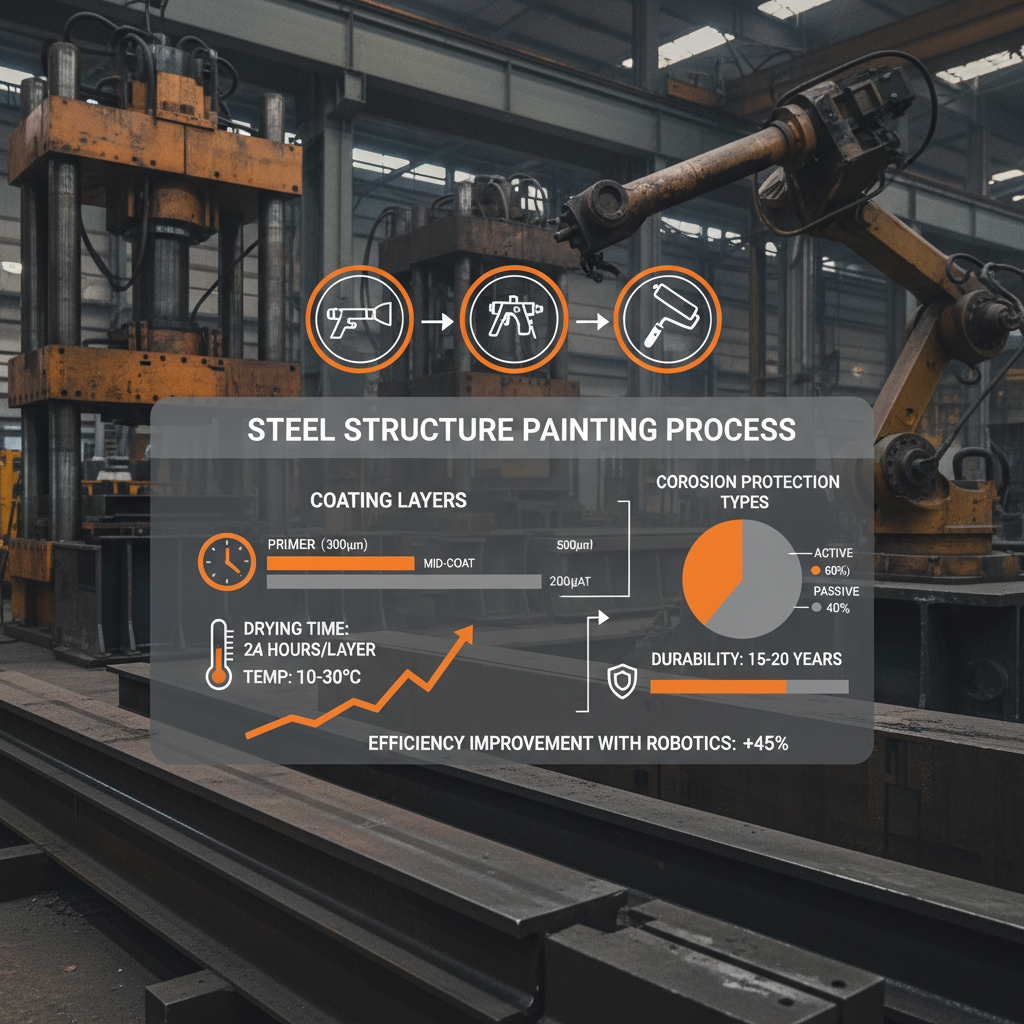
By implementing intelligent solutions, such as the Steel Structure Automatic Painting Line, companies can transition from variable manual costs to predictable automated costs. Automation reduces the intervals between spraying and ensures that every meter of the beam is coated uniformly, reducing the need for expensive paint repairs.
i beam price per meter Performance Metrics
The data indicates that while raw material costs remain a constant baseline, the operational overhead—labor, paint waste, and energy—can be reduced by nearly 40% through the use of intelligent scanning and 3D model recognition systems. This shifts the focus from minimizing the beam's purchase price to minimizing the cost of its completion.
Strategic Procurement for Heavy Steel Structures
Procuring steel beams requires a strategic approach that looks beyond the lowest quote. A low price per meter may indicate lower grade steel or a supplier with poor quality control, which can lead to catastrophic failures or increased fabrication costs. The key is to evaluate the "total landed cost," which includes freight, handling, and the cost of quality assurance.
Buyers should prioritize suppliers who provide detailed mill test reports (MTRs) and guarantee dimensional tolerances. For those using automated lines, ensuring that the beams are supplied with consistent profiles is critical. When the beam dimensions are stable, the 3D scanning systems can operate at peak efficiency, ensuring a perfect coat of paint without manual intervention.
Additionally, consolidating orders to align with mill rolling schedules can significantly reduce the price per meter. By planning procurement months in advance, companies can avoid the premiums associated with "just-in-time" delivery from local warehouses.
Automation Trends in Steel Component Finishing
The industry is moving away from manual labor toward integrated, intelligent production lines. One of the most significant advancements is the use of 3D scanning for steel components. Rather than relying on fixed spray paths, new systems recognize the actual shape of the beam, identifying gaps, bolts, and brackets to stop spraying exactly where it is not needed.
Energy efficiency is also becoming a primary cost driver. Traditional drying ovens are being replaced by natural gas catalytic infrared radiation drying systems. These systems, such as those utilizing Sunkiss Matherm technology, offer flameless combustion, which reduces energy loss and lowers the carbon footprint of the painting process.
Furthermore, the integration of longitudinal conveying devices allows for the continuous flow of large steel components through the painting and drying areas. This removes the bottlenecks associated with batch processing and allows for a higher throughput of beams per day, effectively reducing the fixed overhead cost associated with every meter of steel produced.
Comparative Analysis of Steel Beam Procurement Models
Choosing the right procurement model depends on the project scale and the available processing infrastructure. While some firms prefer buying raw beams and outsourcing the painting, others invest in in-house automated lines to maintain total control over quality and cost.
The following table compares different technical approaches to managing the lifecycle of steel beams, from the initial purchase price to the final finished product.
| Procurement Model | Primary Cost Driver | Finishing Method | Risk Factor |
|---|---|---|---|
| Mill Direct Bulk | Raw Material Market | Basic Prime | Long Lead Times |
| Local Distributor | Markup & Logistics | None/Black Steel | Price Volatility |
| Custom Fabricated | Labor & Engineering | Shop Painted | High Unit Cost |
| Automated In-House | Equipment CapEx | Intelligent Spray | Initial Investment |
| Outsourced Finish | Service Fees | Contractor Grade | Quality Variation |
| Just-In-Time (JIT) | Urgency Premium | Standard Coat | Supply Chain Break |
Ultimately, the most sustainable model for growth is the transition to automated processing. By reducing reliance on manual labor and optimizing paint usage, companies can offset the fluctuations in the raw i beam price per meter, ensuring stable margins regardless of market volatility.
Frequently Asked Questions
Conclusion
While the i beam price per meter serves as a critical starting point for budgeting, the true economic efficiency of a steel project is determined by the synergy between material procurement and processing automation. The volatility of raw steel prices is a constant, but the cost of fabrication is a variable that companies can control through technology.
By integrating intelligent solutions—such as automated spraying, 3D scanning, and energy-efficient drying—manufacturers can significantly lower their operational overhead and improve product quality. Those looking to optimize their steel structure production can explore the advanced automation and intelligent solutions available through www.yeedtech.com.