Comprehensive Guide to Column and Boom Welding Manipulators | Benefits & Applications
Understanding the Column and Boom Welding Manipulator: A Game-Changer in Industrial Welding
When it comes to industrial welding, the column and boom welding manipulator is one of those niche yet crucial pieces of equipment that quietly revolutionize how large-scale projects get done. Frankly, most people don't think twice about what goes into ensuring the huge steel structures around us—bridges, ships, oil rigs—are solid and safe. Yet, these manipulators play a key role in making welding faster, more precise, and safer. Globally, as infrastructure demands accelerate and safety standards tighten, understanding this technology means understanding how industries are evolving to meet tomorrow’s challenges efficiently.
Global Context: Why Column and Boom Welding Manipulators Matter Today
By 2023, the global industrial welding market had reached roughly $15.5 billion, driven heavily by infrastructure growth in Asia-Pacific and expanding offshore oil and gas sectors (ISO, 2023). Welding large diameter pipes and heavy machinery components isn't straightforward. Traditional methods often suffer from inefficiencies, worker fatigue, and inconsistent quality. This is where column and boom welding manipulators step in — automating the positioning and movement of welding heads with precision. As infrastructure projects become more ambitious globally, these manipulators reduce downtime and help meet strict codes of quality and safety.
Oddly enough, while automation seems like the wave of the future, the welding industry still wrestles with finding the right balance between human skill and robotic aid. These manipulators are a halfway point: they assist welders by handling cumbersome or heavy parts, reducing human error and injury.
What is a Column and Boom Welding Manipulator?
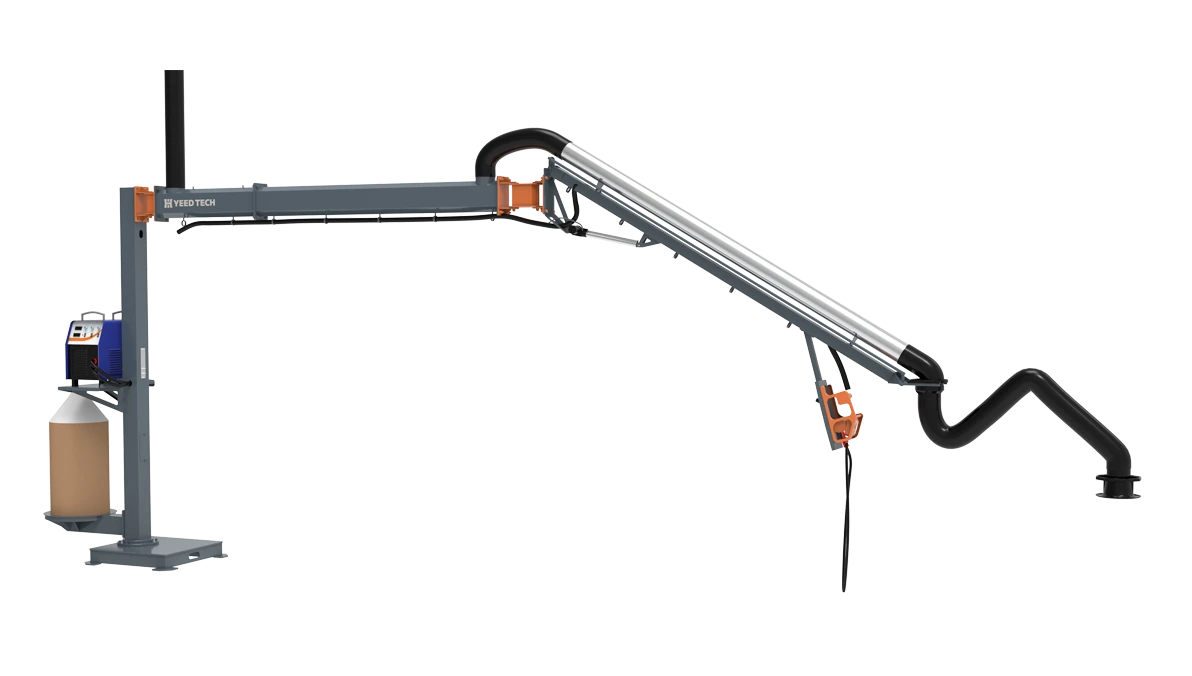
Simply put, it’s a mechanized arm system that supports and maneuvers welding equipment over large workpieces. The ‘column’ refers to a vertical pillar mounted on a sturdy base, while the ‘boom’ is a horizontal arm extending from it, capable of rotating and sliding along the column. This setup allows a welding torch or head to be positioned at nearly any angle or height with steady control.
These devices are staples in shipyards, pressure vessel fabrication plants, and pipeline construction where repetitive, heavy-duty welds are common. They help human welders by absorbing the load and ensuring constant speed and positioning for high-quality weld beads—critical when minute errors can lead to costly repairs or catastrophic failures.
Core Components That Make It Work
- Durability: These manipulators are built from heavy-duty steel with corrosion-resistant coatings, ensuring they endure harsh jobsite conditions without frequent maintenance.
- Precision Control: Modern systems often integrate digital controllers with programmable features to maintain consistent welding speeds and paths—essential for repeatable excellence.
- Range of Motion: The column allows vertical travel, while the boom rotates horizontally, combining to cover large surfaces without repositioning the base.
- Load Capacity: Depending on the model, they can handle light welding heads up to heavy multi-axis automated welding guns weighing hundreds of kilograms.
- Modularity & Scalability: Many manipulators offer options to extend boom lengths or add custom tooling; tailored to project scales, from small workshops to massive fabrication yards.
It feels like each of these aspects directly answers practical challenges—like how to maintain weld quality while dealing with giant pipes, or how to keep welders safe and productive in awkward, repetitive tasks.
Product Specification Highlights
| Specification | Typical Values |
|---|---|
| Column height | 5,000 mm (variable by model) |
| Boom length | Up to 10,000 mm |
| Load handling capacity | Up to 500 kg |
| Rotation angle (boom) | 360° Continuous |
| Control Type | Manual / CNC Automated |
Global Applications & Real-World Use Cases
From sprawling Asian shipyards to oil fields deep in the North Sea, column and boom welding manipulators find homes everywhere heavy, precise welding is required. Oddly, their use crosses cultures and continents because the challenges they solve—reducing downtime, ensuring seam consistency, and safeguarding workers—are universal.
- Shipbuilding: Facilitates welding on curved hull sections that would be tough to reach or steady by hand.
- Pressure Vessel Manufacturing: Ensures round vessel seams are welded evenly with minimal distortion.
- Pipeline Construction: Used to weld pipe sections with precision amid challenging outdoor conditions.
- Heavy Machinery Assembly: Supports fabrication of crane booms, mining equipment, where load capacity is critical.
Take post-disaster reconstruction: after a typhoon damages infrastructure, manufacturers equipped with these manipulators can quickly rebuild piping or structural steel components with fewer defects and downtime, accelerating relief work. Or in remote industrial zones, their ability to hold welding torches steadily over hours reduces worker fatigue and cuts error rates. Not many machines can make a welder’s physically demanding job safer and more productive at the same time.
Vendor Comparison: Popular Column and Boom Welding Manipulator Brands
| Brand | Max Load Capacity | Automation Features | Price Range |
|---|---|---|---|
| MegaWeld Tools | 500 kg | Full CNC control | $40,000 - $70,000 |
| SteelPro Systems | 350 kg | Semi-automated with joystick | $25,000 - $45,000 |
| WeldMaster | 400 kg | Manual but with digital readouts | $15,000 - $30,000 |
Advantages and Long-Term Value of Using Column and Boom Welding Manipulators
The benefits here are both practical and profound. Reducing human exposure to awkward, repetitive welding tasks means accidents drop, fatigue lessens, and job satisfaction can improve. From a business perspective, companies see fewer weld defects, less material waste, and improved throughput — translating directly to cost savings.
Moreover, these manipulators push sustainability forward by enabling more precise welds which minimize rework and scrap. That aligns nicely with ISO 14001 environmental standards many manufacturers seek to meet. And then there's the clear social dimension: safer workplaces mean workers feel valued, trust builds, and communities benefit from fewer industrial injuries.
Emerging Trends and Innovations
The next generation of column and boom welding manipulators is integrating digital transformation. Think sensors monitoring weld quality in real time, AI-driven adaptive controls adjusting to pipe thickness or weld consistency, and IoT connectivity for remote monitoring and diagnostics. There’s also increasing interest in incorporating green energy — solar or battery-powered controls to reduce carbon footprint on-site.
Frankly, automation still has plenty of room to grow here. Many engineers predict manipulators will soon support fully robotic welding cells in hazardous environments, such as radioactive or deep-sea zones, expanding their humanitarian and industrial impact alike.
Challenges and Their Solutions
Not all is perfect. The initial cost of these systems can be high, especially for smaller workshops. There’s also a learning curve; welders must adapt to new controls and workflows. Integration into existing facilities sometimes faces spatial constraints.
However, solutions are emerging: modular designs that scale, financing plans for SMEs, and more intuitive user interfaces reduce barriers. Training programs combining virtual reality simulations with hands-on practice help welders upskill efficiently.
FAQ: Frequently Asked Questions About Column and Boom Welding Manipulators
- Q: What size workpieces can column and boom welding manipulators handle?
A: Typically, these manipulators are designed for large-scale components like pipes over 2 meters in diameter or structural steel parts weighing hundreds of kilograms. Specific size limits depend on column height and boom length, which manufacturers customize based on project needs. - Q: Are these manipulators compatible with automated welding heads?
A: Yes, many models support full integration with CNC-controlled welding heads for automated welding, offering precise control over speed and angle to optimize quality. - Q: How portable are these systems?
A: While mainly fixed, some manipulators come as semi-portable units mounted on rails or with modular bases for relocation within fabrication yards. Fully mobile options exist but are less common. - Q: Can smaller manufacturers afford column and boom welding manipulators?
A: Entry-level models with manual controls make manipulators more accessible, and leasing or financing options help mitigate upfront costs. - Q: How do these manipulators improve worker safety?
A: By taking over heavy lifting, repetitive motions, and awkward welding positions, they reduce physical strain and exposure to hazards, thereby lowering accident rates.
Summary & Call to Action
In essence, column and boom welding manipulators represent a blend of robust engineering and smart automation that crucially improves industrial welding. From boosting productivity to nurturing safer, more sustainable workplaces, their long-term value is clear. If your facility handles large-scale welding projects or you’re curious to explore how this technology might fit your operations, I recommend visiting column and boom welding manipulator suppliers like YEEED for detailed options tailored to your scale and goals.
Exploring how these manipulators work is a reminder: even the most unassuming machines quietly empower progress—and frankly, that’s kind of inspiring.
Takeaway: Investing in a column and boom welding manipulator can boost quality, safety, and cost-efficiency—an industrial no-brainer for the future.
Latest News
-
Efficient automated hot air drying equipment for steel structure application
NewsApr.16,2026 -
Efficient hot air drying system for steel structure spraying line
NewsApr.09,2026 -
Optimizing Steel Structure Spraying with Hot Air Drying Technology Solutions
NewsApr.07,2026 -
HighEfficiency Hot Air Drying Painting Equipment for Superior Industrial Coatings
NewsApr.04,2026 -
Optimizing Industrial Processes with Hot Air Furnace Heating Spraying Systems
NewsMar.31,2026 -
Comprehensive Tailormade Steel Structure Spraying Solution for Enhanced Durability
NewsMar.28,2026 -
Optimizing Steel Structure Protection through Customization and Integration of Spraying System
NewsMar.26,2026