Structural Coating: Faster, Durable Protection—Why Us?
Structural Coating for Heavy Steel: Field Notes from the Paint Line
If you’ve ever walked a bridge deck at dawn or stood beside a wind tower in ocean spray, you know why structural coating matters. Real-world exposure is merciless. The Heavy Steel Structure Painting Line out of No.28, Wei’Er Road, Anping County, Hebei Province, China, is one of those systems built for harsh realities—big beams, odd geometries, and deadlines that don’t care about humidity. To be honest, I didn’t expect it to be this dialed-in.
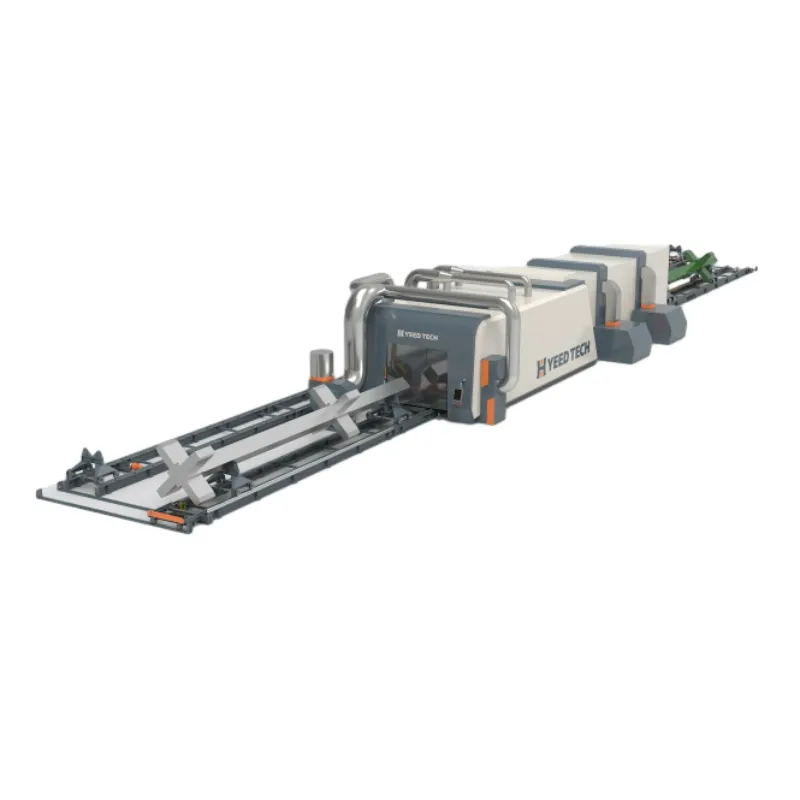
What’s Changing in Heavy-Steel structural coating?
The fast trendline: zinc-rich primers are still king for C4–C5 environments, but low-VOC epoxies and waterborne systems are finally practical. We’re also seeing smarter airless spray robots, barcode-based DFT traceability, and oven zones tuned by actual substrate temperature (not just air) for more consistent curing. Surprisingly, energy recovery on cure ovens is becoming a standard spec in new plants.
Process Flow and Technical Stack
- Surface prep: Abrasive blasting to ISO 8501-1 Sa 2.5; profile ≈ 50–75 μm. Chloride check per ISO 8502-9, target < 20 mg/m².
- Coating materials: Zn-rich epoxy primer (85%+ Zn dust by weight in dry film), epoxy MIO mid-coat, aliphatic polyurethane topcoat. Optional: thermal spray zinc for extreme C5-M.
- Application: High-pressure airless or AA airless, robotic or manual assist for complex weldments; preheat for condensation control.
- DFT control: 240–320 μm total typical; peak edges stripe-coated per SSPC-PA 2 guidelines.
- Curing: Gas-fired convection with IR assist; substrate-temperature feedback loop.
- Quality tests: Adhesion ASTM D4541 > 6 MPa (many customers report 8–10 MPa); salt spray ISO 9227/ASTM B117 > 1,000 h without undercutting > 2 mm; holiday test per NACE SP0188 for high-builds.
- Service life: Around 15–25 years in C4/C5 if maintenance washdowns and spot repairs follow ISO 12944-8 intervals. Real-world use may vary with design details.
Product Snapshot: Heavy Steel Structure Painting Line
| Parameter | Spec | Notes |
|---|---|---|
| Max workpiece | ≈ 30 m L × 4 m W × 4 m H | Customizable bays, modular conveyors |
| Throughput | 10–20 tph (steel tonnage) | Depends on coating stack/DFT |
| Application | Airless/AA airless, robotic + manual | Edge striping capability |
| Oven | Convection + IR assist | Energy recovery optional |
| Compliance | ISO 12944, CE; ATEX components | Local codes on request |
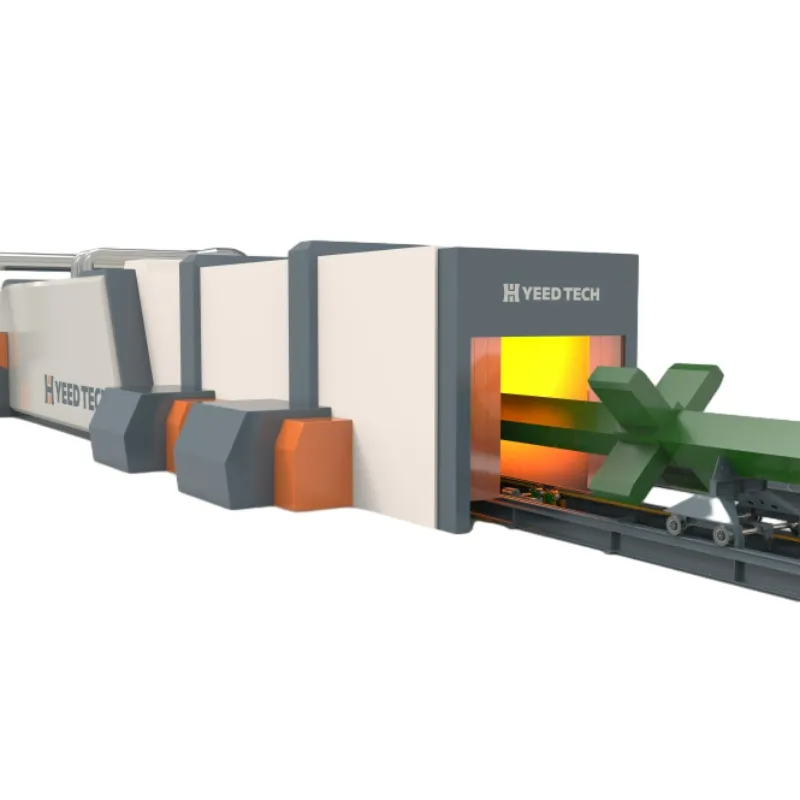
Where It’s Used
Bridges and viaducts, offshore jackets and wind towers, port cranes, mining frames, pressure-vessel skids, ship blocks—anywhere a structural coating has to survive UV, salt, abrasion, and the occasional “oops” with a chain sling.
Vendor Landscape (quick, practical view)
| Vendor | Strengths | Limitations | Lead Time | Price Level |
|---|---|---|---|---|
| YEEEEED (Hebei) | Heavy-steel focus, robust conveyors, customization | Global spare-parts logistics can take planning | ≈ 10–20 weeks | $$ (efficient TCO) |
| EU Integrator A | High automation; deep ATEX pedigree | Premium pricing; change orders add up | ≈ 20–32 weeks | $$$ |
| Local Fabricator B | Fast service, simple lines | Limited robotics; variable QA | ≈ 6–12 weeks | $ |
Customization That Actually Matters
- Profile-specific blasting nozzles for tough geometries
- Robot paths trained on typical weldments; teach-in for outliers
- Traceability: barcode/QR DFT logs tied to ISO 12944 system IDs
- Energy module upgrades if power cost is a sore spot
Case Notes from the Floor
A port-crane fabricator in Southeast Asia switched to this line and reported rework down by ~35% within three months. Adhesion (ASTM D4541) averaged 8.7 MPa on zinc epoxy systems; DFT compliance hit 96% first-pass. “Less touch-up, better edges,” their QA lead told me—edge striping and oven tuning were the quiet heroes.
Sources and Standards:
- ISO 12944 Parts 1–9: Corrosion protection of steel structures by protective paint systems.
- ISO 8501-1, ISO 8502-9: Surface preparation and soluble salts testing.
- ASTM D4541: Pull-Off Strength of Coatings; ASTM B117 / ISO 9227: Salt Spray/Corrosion.
- SSPC-PA 2: Measurement of Dry Coating Thickness; NACE SP0188: Holiday Detection.
Latest News
-
Efficient automated hot air drying equipment for steel structure application
NewsApr.16,2026 -
Efficient hot air drying system for steel structure spraying line
NewsApr.09,2026 -
Optimizing Steel Structure Spraying with Hot Air Drying Technology Solutions
NewsApr.07,2026 -
HighEfficiency Hot Air Drying Painting Equipment for Superior Industrial Coatings
NewsApr.04,2026 -
Optimizing Industrial Processes with Hot Air Furnace Heating Spraying Systems
NewsMar.31,2026 -
Comprehensive Tailormade Steel Structure Spraying Solution for Enhanced Durability
NewsMar.28,2026 -
Optimizing Steel Structure Protection through Customization and Integration of Spraying System
NewsMar.26,2026