Structural Coating: Durable, Fast, Cost-Effective Protection
What Structural Coating Means on a Modern Heavy-Steel Paint Line
When people say Structural Coating in the steel world, they’re usually talking about a disciplined process, not just “spray and pray.” In fact, over the last five years, the conversation has shifted from basic booths to closed-loop systems with traceability, solvent capture, and smarter curing. I’ve walked a few lines that felt like small factories inside factories—impressive, to be honest.
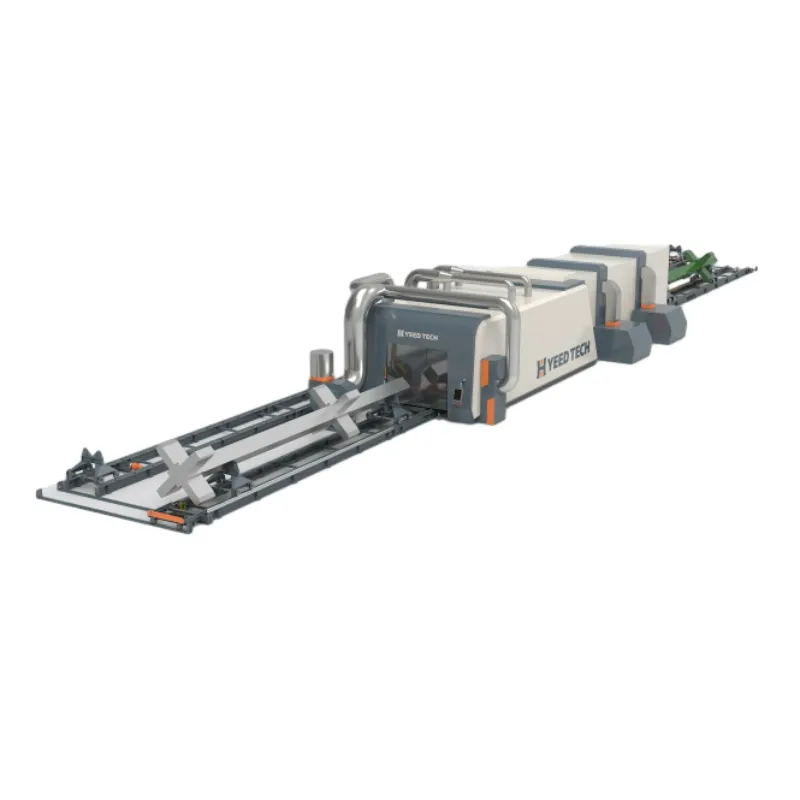
Product Snapshot: Heavy Steel Structure Painting Line
Origin: No.28, Wei’Er Road, Anping County, Hebei Province, China. This equipment is purpose-built for large and complex beams, columns, trusses, and welded assemblies where consistent Structural Coating is critical for life-cycle cost control.
Typical Process Flow
- Surface preparation: abrasive blasting to ISO 8501-1 Sa 2½; profile verified per ISO 8503. - Preheat/flash-off stage: moisture drive-off and temperature conditioning (≈35–60°C). - Airless/air-assisted spray: epoxy zinc-rich primer, epoxy MIO intermediate, polyurethane or polysiloxane topcoat—depending on ISO 12944 category. - Flash-off and forced curing: convection or IR-assisted ovens; temperature logging for each batch. - QC: DFT checks (ISO 19840/SSPC-PA 2), adhesion (ASTM D3359), salt spray verification (ASTM B117 for benchmarking), gloss (ASTM D523), hardness (ASTM D3363). It sounds fussy, but that’s how you get predictable service life.
Why It Matters Right Now
Projects are pushing into C4/C5 environments, offshore wind, and long-span bridges. Many customers say the consistent film build and lower overspray alone justify upgrading. And yes, emissions: VOC capture with RTOs or carbon beds is increasingly non-negotiable.
| Workpiece envelope | Up to 3.5 m W × 2.8 m H × 18 m L (customizable) |
| Conveyor type | Heavy-duty floor roller or overhead trolley (10–20 t max load options) |
| Coating systems | Epoxy zinc-rich, epoxy MIO, polyurethane, polysiloxane; 1K/2K; heated lines |
| Target DFT | 120–320 μm total system (per ISO 12944 category) |
| Line speed | 0.3–1.0 m/min (batch/continuous modes) |
| Curing | Gas/electric convection; optional IR boost; PID control |
| VOC control | Dry filters + optional RTO/adsorption for compliance |
| Service life | ≈15–25 years in C4/C5 with correct system and maintenance |
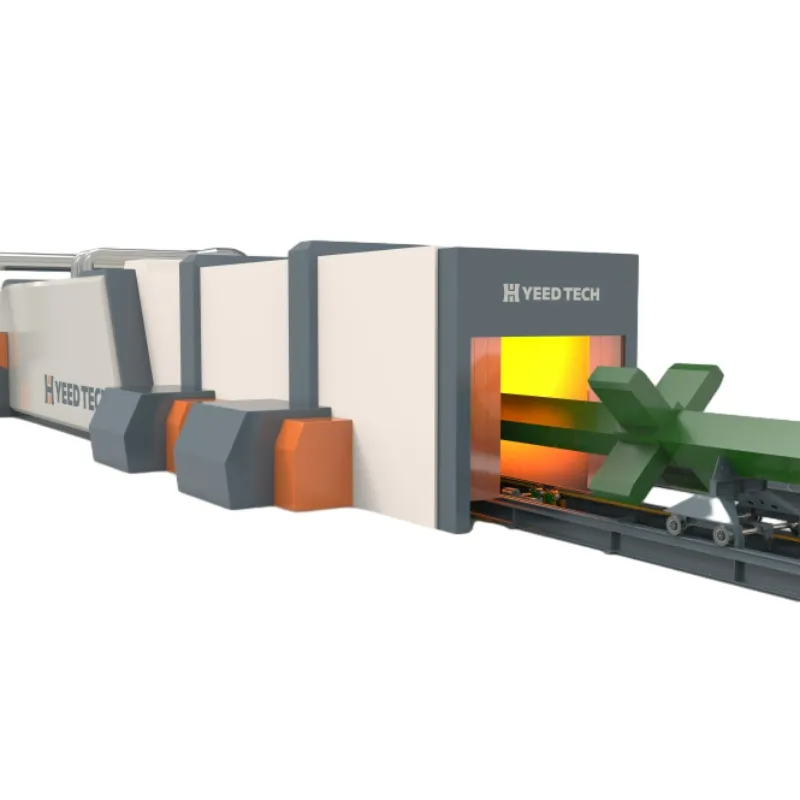
Applications
Bridges, stadium roofs, offshore jackets, pressure-vessel skirts, port cranes, wind-turbine towers, and heavy OEM frames—all classic Structural Coating use cases. Fabricators tell me the traceable QC is what their EPC clients ask about first.
Vendor Landscape (quick take)
| Vendor | Capacity | VOC/ESG | Certs | Support | Note |
|---|---|---|---|---|---|
| YEEEED Heavy Steel Structure Painting Line | Up to 18 m parts; 10–20 t | RTO/adsorption options | ISO process alignment | Remote + onsite (APAC/EU projects) | Strong value-to-capability ratio |
| EU Integrator A | Mid-to-large | Advanced RTO suites | CE/EN focus | Strong EU presence | Premium pricing |
| Regional Retrofit B | Small-to-mid | Basic filtration | Project-based | Local only | Lower capex; fewer automations |
Field Notes and Results
- A bridge fabricator reported ≈23% rework reduction after switching to recipe-driven Structural Coating (mostly from steadier DFT and better booth airflow). - A wind-tower shop saw cycle time drop by around 12% with IR-assisted curing on topcoats. - Typical salt-spray lab benchmarks on epoxy/polyurethane stacks clear 720–1,000 h per ASTM B117; real life depends on prep and touch-up, of course.
Customization and Compliance
Options include robot arms for repetitive geometries, two-component proportioners with ratio assurance, barcode job tracking, and oven data loggers for audit trails. Testing aligns with ISO 12944, ISO 19840, ISO 8501-1; adhesion and corrosion benchmarks per ASTM D3359 and ASTM B117. That mix tends to satisfy EPC and infrastructure owners who ask the tough questions.
Final Thought
The biggest win with modern Structural Coating lines isn’t just a prettier finish—it’s predictable longevity and documentation. And yes, that’s what keeps projects out of trouble five winters from now.
- ISO 12944: Paints and varnishes — Corrosion protection of steel structures by protective paint systems.
- ISO 8501-1 / ISO 8503: Preparation of steel substrates — Visual rust grades and surface roughness.
- ISO 19840: Measurement of dry film thickness on rough surfaces.
- ASTM B117 / ASTM D3359 / ASTM D523 / ASTM D3363: Corrosion, adhesion, gloss, and hardness test methods.
Latest News
-
Efficient automated hot air drying equipment for steel structure application
NewsApr.16,2026 -
Efficient hot air drying system for steel structure spraying line
NewsApr.09,2026 -
Optimizing Steel Structure Spraying with Hot Air Drying Technology Solutions
NewsApr.07,2026 -
HighEfficiency Hot Air Drying Painting Equipment for Superior Industrial Coatings
NewsApr.04,2026 -
Optimizing Industrial Processes with Hot Air Furnace Heating Spraying Systems
NewsMar.31,2026 -
Comprehensive Tailormade Steel Structure Spraying Solution for Enhanced Durability
NewsMar.28,2026 -
Optimizing Steel Structure Protection through Customization and Integration of Spraying System
NewsMar.26,2026