Efficient Welding Boom Arm | Fume Extraction & Air Filtration
Optimizing Air Quality and Productivity with Advanced Fume Extraction Technology
In high-stakes industrial environments, the imperative for worker safety and operational efficiency cannot be overstated. Central to achieving these objectives in welding operations is the advanced functionality of a welding boom arm. These articulated extraction systems are not merely accessories but critical infrastructure components designed to capture hazardous fumes and particulate matter directly at the source, preventing their dispersal into the ambient workspace. Modern industrial trends underscore a shift towards integrated solutions that not only comply with stringent environmental and safety regulations but also enhance productivity and reduce long-term operational costs.
The deployment of an effective fume extraction system, anchored by a robust welding boom arm, is vital across diverse sectors, from heavy fabrication and automotive manufacturing to petrochemical facilities and shipbuilding. These systems contribute significantly to a healthier work environment, mitigating risks associated with respiratory diseases and improving overall air quality. Furthermore, the strategic placement and ergonomic design of these arms allow welders greater flexibility and comfort, directly impacting weld quality and production throughput.
This article delves into the technical intricacies, application benefits, and strategic considerations for integrating high-performance fume extraction arm solutions, including their role within comprehensive welding air filtration systems, to ensure superior environmental control and operational excellence.
Industry Trends and Regulatory Landscape for Fume Extraction
The welding industry is continually evolving, driven by technological advancements and increasingly stringent regulatory frameworks globally. Key trends include the adoption of intelligent, automated welding processes, the demand for energy-efficient solutions, and a heightened focus on environmental protection and worker health. Regulatory bodies such as OSHA (Occupational Safety and Health Administration) in the U.S. and HSE (Health and Safety Executive) in the UK, along with ISO standards, mandate effective control of welding fumes, which are classified as Group 1 carcinogens by the International Agency for Research on Cancer (IARC). This necessitates sophisticated fume extraction technologies.
The market for welding gas extractor solutions is projected for significant growth, fueled by these regulations and a growing awareness of long-term health impacts. Manufacturers are responding with innovations such as integrated sensing technologies, variable speed drives for energy optimization, and modular designs that facilitate easy maintenance and adaptability. The shift towards sustainable manufacturing practices also emphasizes solutions that offer improved filtration efficiency and extended filter life, thereby reducing waste and operational costs.
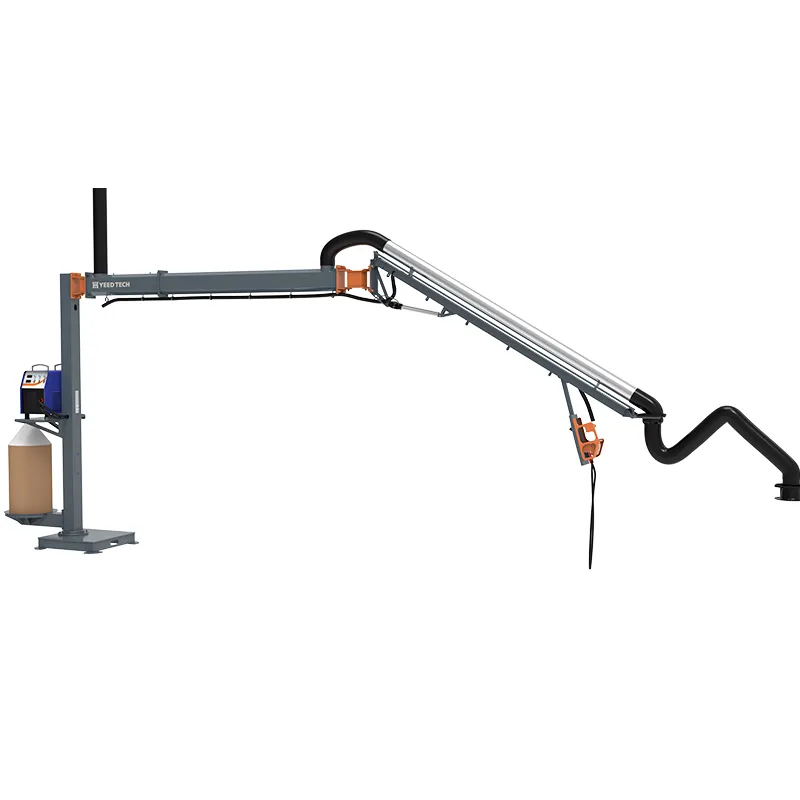
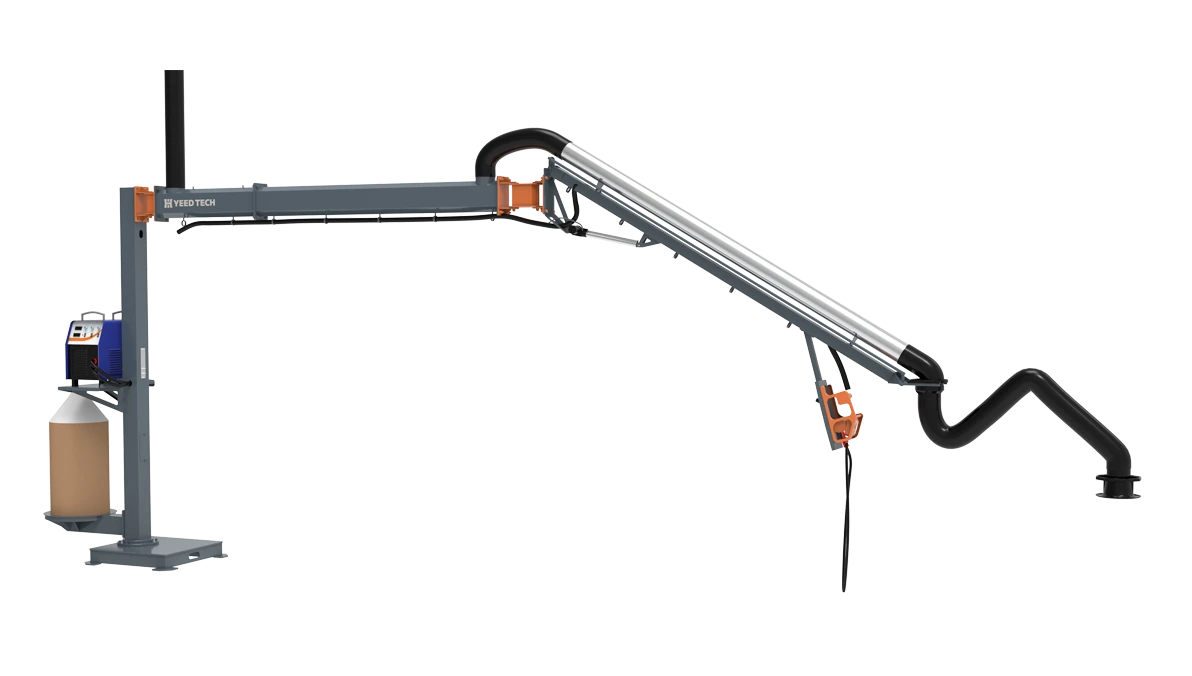
Image: Ergonomic positioning of a fume extraction arm for effective fume capture.
Manufacturing Process of a High-Performance Welding Boom Arm
The production of a durable and efficient welding boom arm involves a meticulous process, ensuring robust construction and optimal functionality. Each stage is carefully controlled to meet stringent quality and performance criteria, often conforming to international standards like ISO 9001 for quality management and ANSI/AWS standards for welding equipment.
Process Flow Overview:
1. Material Selection & Procurement
High-grade steel alloys (e.g., Q235B, SS304) for structural components, ensuring strength and corrosion resistance.
PVC/PU composites for flexible hoses, offering chemical resistance and flexibility.
2. Component Fabrication
- CNC Machining: Precision cutting and shaping of metal parts for joints and brackets.
- Welding: Robotic and manual welding to assemble structural elements, conforming to AWS D1.1 standards.
- Bending & Forming: Shaping ducting and support arms.
- Surface Treatment: Powder coating or galvanization for corrosion resistance.
3. Assembly & Integration
Installation of flexible hoses, dampers, and self-supporting mechanisms.
Integration with control systems, if applicable (e.g., motor starters for fans).
4. Quality Control & Testing
- Leakage Testing: Ensuring integrity of ductwork.
- Articulation Test: Verifying smooth movement and stability of the arm.
- Airflow Performance: Measuring capture velocity and static pressure.
- Load Bearing Test: Ensuring structural integrity under operational stress.
The typical service life of a well-maintained extraction arm can exceed 10-15 years, primarily due to the selection of robust materials and precision engineering. Advantages in typical application scenarios include significant energy saving through efficient fume capture, reducing the load on general ventilation systems, and superior corrosion resistance due to specialized coatings and material choices, making them ideal for environments like petrochemical plants and metallurgy facilities where harsh chemicals or high temperatures are common.
Technical Specifications and Parameters
Selecting the appropriate welding boom arm requires a detailed understanding of its technical specifications. These parameters dictate the arm's effectiveness, suitability for specific applications, and overall integration with existing or new welding air filtration systems. Key considerations include reach, diameter, airflow capacity, and material composition.
Typical Welding Fume Extraction Arm Specifications:
| Parameter | Specification Range | Unit |
|---|---|---|
| Arm Length (Reach) | 2 - 5 | meters (m) |
| Duct Diameter | 150 - 200 | millimeters (mm) |
| Recommended Airflow | 1000 - 2500 | m³/h |
| Material (Arm Structure) | Powder-coated Steel / Stainless Steel | N/A |
| Hose Material | PVC / PU / High-temperature resistant composites | N/A |
| Mounting Options | Wall-mounted, Ceiling-mounted, Bench-mounted, Mobile | N/A |
| Operating Temperature | -10 to +80 | °C |
| Weight (approx.) | 25 - 60 | kg |
These specifications are crucial for determining the capture efficiency (the ability to contain fumes before they escape), static pressure requirements for the associated fan system, and the overall longevity of the unit under specified operating conditions. Understanding the pressure drop across the arm is also vital for fan sizing and energy consumption calculations.
Application Scenarios and Technical Advantages
The versatility of a welding boom arm makes it indispensable across a wide array of industrial applications. Its primary technical advantage lies in its ability to provide localized fume extraction, targeting pollutants at the source, which is far more effective than general room ventilation.
Key Application Areas:
- Automotive Manufacturing: Welding chassis, body panels, and exhaust systems. The precise positioning of the arm ensures that fine particulate matter and metallic oxides from MIG/MAG welding are efficiently removed.
- Shipbuilding and Heavy Fabrication: Large-scale structural welding where access can be challenging. Longer reach arms are crucial here for covering extensive workpieces.
- Petrochemical Industry: Welding and fabrication of pipes, tanks, and pressure vessels. Here, the corrosion-resistant properties of stainless steel arms are paramount, especially when dealing with specialized alloys and potentially corrosive fumes.
- Aerospace Sector: Precision welding of specialized alloys. The clean air environment facilitated by efficient extraction is critical for maintaining material integrity and worker health in these high-value operations.
- Educational Institutions and Training Centers: Providing safe welding training environments, adhering to academic and occupational safety standards.
Technical Advantages:
- Superior Capture Efficiency: Directly capturing fumes at the arc, preventing dispersion and significantly reducing welder exposure to harmful substances like manganese, chromium, and nickel compounds.
- Energy Efficiency: By targeting fumes at the source, less air needs to be heated or cooled and then expelled, leading to substantial energy savings compared to general ventilation systems.
- Ergonomic Design: Self-supporting mechanisms and smooth articulation allow welders to effortlessly position the arm, minimizing physical strain and improving workflow.
- Enhanced Visibility: Removing fumes improves visibility of the weld pool, leading to higher quality welds and reduced rework.
- Compliance: Helps facilities meet or exceed occupational exposure limits (OELs) and environmental regulations.
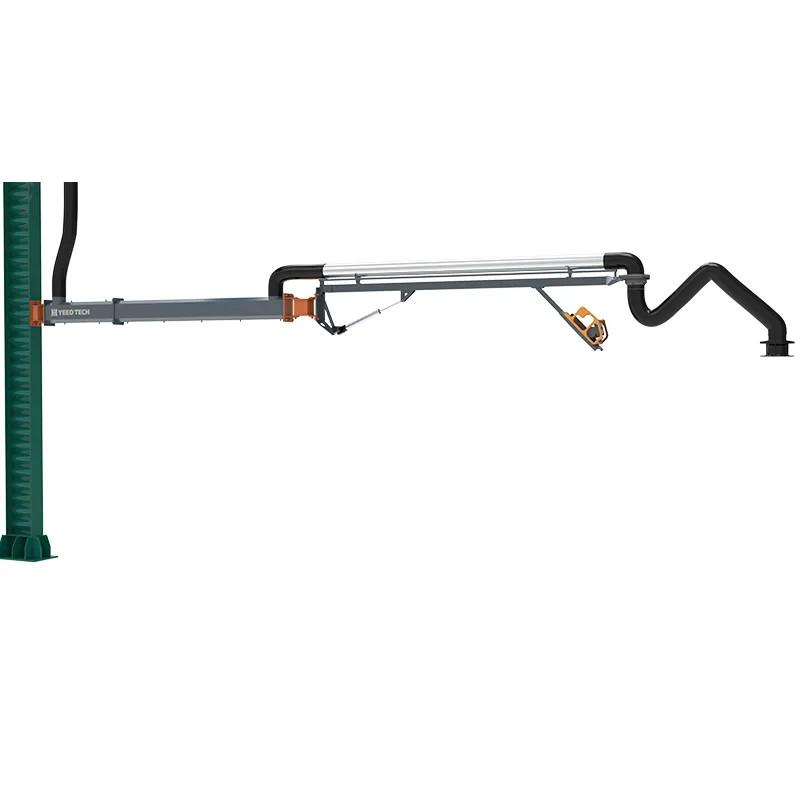
Image: A fume extraction arm in operation during heavy fabrication, ensuring clean air.
Vendor Comparison and Selection Criteria for Welding Fume Extraction Arms
Choosing the right provider for a welding boom arm is a critical decision that impacts long-term operational costs, compliance, and worker health. While many manufacturers offer similar products, key differentiators emerge in build quality, after-sales support, customization capabilities, and the overall welding fume extraction arm price.
Key Comparison Factors:
- Build Quality & Materials: Evaluate the grade of steel, coating processes (e.g., epoxy powder coating for durability), and hose materials (e.g., polyurethane for abrasion resistance).
- Articulation & Stability: A superior arm will hold its position without drift, even under slight vibration, thanks to well-designed spring-loaded or friction joints.
- Airflow Performance: Compare stated maximum airflow, capture velocity at the hood, and pressure drop curves. Ensure compatibility with your existing welding air filtration systems.
- Maintenance & Serviceability: Ease of cleaning, replacement of worn parts, and access to technical support.
- Certifications: Verify compliance with relevant international standards (e.g., CE, UL, ISO).
- Warranty & Support: The length and comprehensiveness of the warranty, availability of spare parts, and responsive technical assistance are vital.
Vendor Comparison Table (Illustrative):
| Feature | Vendor A (YEEED) | Vendor B | Vendor C |
|---|---|---|---|
| Arm Length Options | 2m, 3m, 4m, 5m | 2m, 3m, 4m | 3m, 4m, 5m |
| Duct Material | Polyurethane (PU) | PVC | Composite |
| Mounting Versatility | Wall/Ceiling/Mobile | Wall/Ceiling | Wall/Bench |
| Self-Supporting Mechanism | External Spring Linkage | Internal Gas Strut | Internal Friction Joints |
| Warranty | 2 Years | 1 Year | 1 Year |
| Compliance | CE, ISO 9001 | CE | ISO |
A thorough evaluation of these factors ensures that the investment in a fume extraction arm yields optimal performance and long-term value, aligning with both budgetary constraints and operational demands.
Customized Solutions and Application Case Studies
Beyond standard offerings, many industrial environments demand customized welding boom arm solutions to address unique spatial constraints, specific material handling requirements, or specialized welding processes. Manufacturers often collaborate with clients to design systems that integrate seamlessly into complex production lines.
Customization Examples:
- Extended Reach Arms: For very large workpieces or multiple welding stations.
- High-Temperature Resistance: Arms designed with specialized hoses and components for extreme heat applications, such as foundries or plasma cutting.
- Corrosion-Resistant Builds: Full stainless steel construction for environments with aggressive chemicals (e.g., acid pickling lines, pharmaceutical facilities).
- Integrated Lighting & Cameras: For enhanced visibility and remote monitoring in intricate welding tasks.
- Mobile Solutions: Arms mounted on portable filtration units, offering flexibility across multiple workstations.
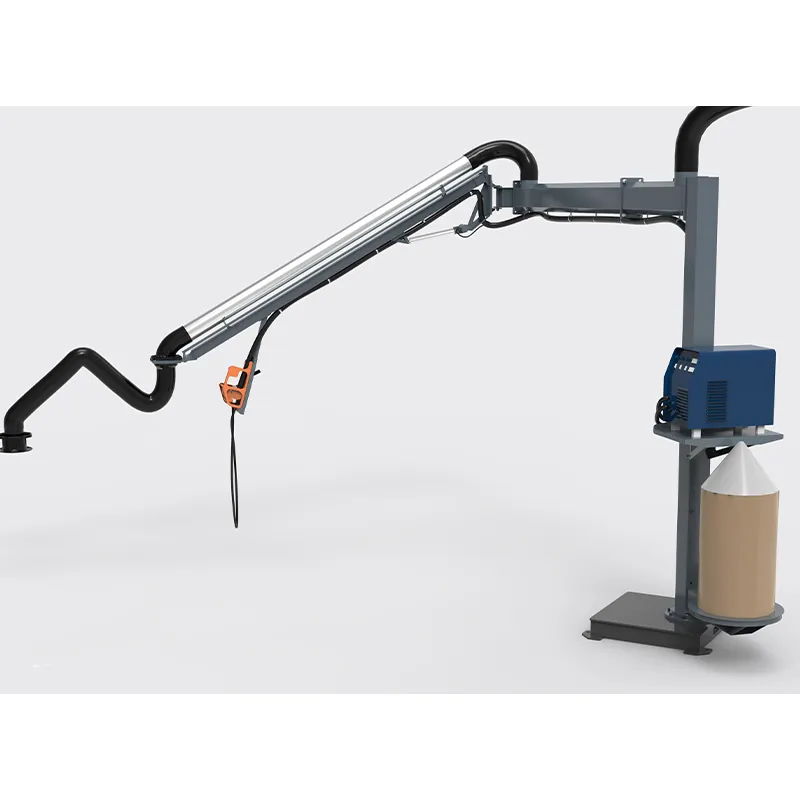
Image: A customized extraction arm solution integrated into a specialized workstation.
Application Case Study: Large-Scale Shipbuilding Yard
A major shipbuilding client faced challenges in maintaining air quality during extensive sub-assembly welding, primarily involving MIG/MAG and FCAW processes. The existing general ventilation system was insufficient, leading to high concentrations of particulate matter and metal fumes, impacting worker health and productivity.
Solution: We collaborated to design and implement a system featuring 15 units of 4-meter reach articulated extraction arms, paired with centralized welding air filtration systems, strategically placed across their fabrication halls. The arms were wall-mounted to maximize floor space and equipped with high-efficiency capture hoods.
Results: Post-installation air quality monitoring showed a reduction of respirable particulate matter by over 85%, significantly lowering worker exposure levels. The welders reported improved comfort and visibility, which translated into a 10% increase in productivity and a noticeable reduction in respiratory complaints. The integrated system also provided substantial energy savings due to optimized airflow and reduced heating/cooling loads. This project exemplifies how tailored solutions can address complex industrial challenges effectively, underpinning our commitment to comprehensive environmental control.
Trustworthiness: FAQ, Lead Time, Warranty, and Support
Establishing trust with B2B clients requires transparent policies, robust support systems, and clear commitments. Our approach to providing high-quality fume extraction solutions is underpinned by these core principles.
Frequently Asked Questions (FAQ):
Q: What is the ideal length for a welding boom arm?
A: The ideal length depends on your workspace layout and the reach required to cover your welding area effectively. Commonly, arms range from 2 to 5 meters. Our experts can assist with on-site assessments to recommend the optimal length.
Q: How often do the filters in the associated welding air filtration systems need to be replaced?
A: Filter life varies significantly based on welding volume, type of material, and fume generation rate. However, high-efficiency filters typically last 6-12 months in moderate use environments. Advanced systems often feature pressure gauges or sensors to indicate when filter replacement is necessary.
Q: Can your extraction arms be integrated with existing ventilation systems?
A: Yes, our arms are designed for versatile integration. We offer various mounting options and can provide adaptors and specific ductwork designs to connect seamlessly with your existing infrastructure, provided the system can handle the additional airflow requirements.
Q: What is the typical welding fume extraction arm price?
A: The price varies widely based on length, material, features (e.g., integrated lighting, special coatings), and brand. Basic models might start from a few hundred dollars, while advanced, custom, or longer-reach arms can range into several thousands. We provide detailed quotations based on your specific requirements.
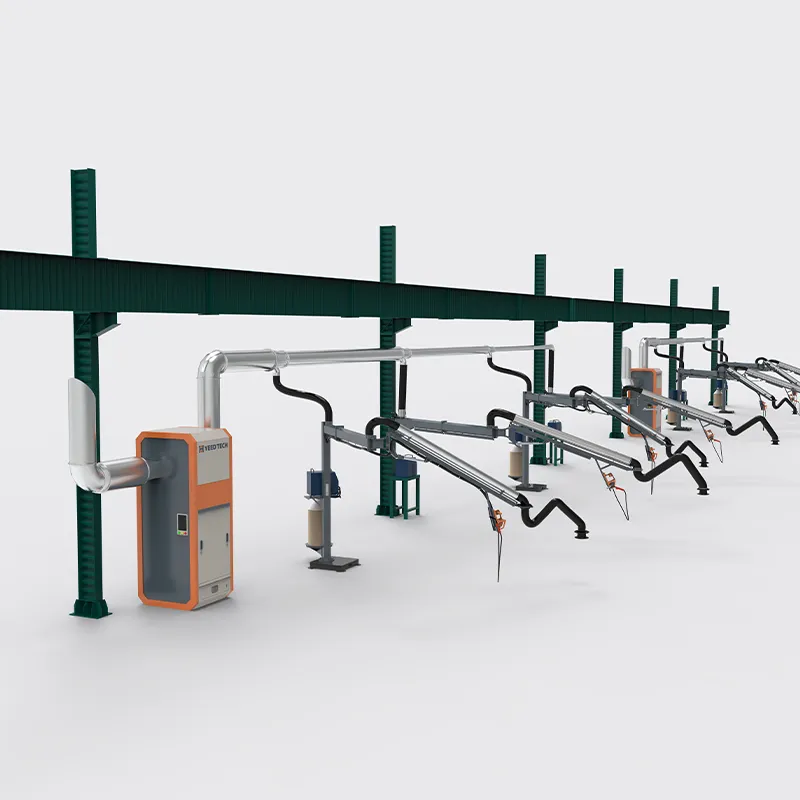
Image: A comprehensive fume extraction system featuring multiple articulated extraction arm installations.
Lead Time and Fulfillment:
Standard extraction arm models typically have a lead time of 2-4 weeks from order confirmation to shipment. For customized solutions or large-scale projects, lead times may extend to 6-10 weeks, depending on design complexity and component availability. We maintain robust supply chain management to ensure timely delivery and installation.
Warranty Commitments:
All our extraction arm products come with a comprehensive 2-year warranty against manufacturing defects and material failures under normal operating conditions. This commitment reflects our confidence in the quality and durability of our products, exceeding many industry standards.
Customer Support:
We offer dedicated customer support, including technical assistance, troubleshooting, and spare parts availability, accessible via phone and email during business hours. For complex issues, on-site service and diagnostic support can be arranged through our network of certified technicians. Our goal is to ensure continuous, efficient operation of your fume extraction systems.
Conclusion: Investing in Air Quality and Productivity
The selection and implementation of a high-quality welding boom arm represent a strategic investment in both human capital and operational efficiency. By effectively controlling welding fumes at the source, businesses can ensure compliance with evolving safety regulations, protect the health of their workforce, and enhance overall productivity through improved working conditions and reduced absenteeism. The advanced engineering, robust materials, and customizable features of modern fume extraction arms make them an indispensable component of any professional welding setup.
As industrial processes become more complex and environmental scrutiny intensifies, partnering with a knowledgeable vendor that provides not only superior products but also comprehensive support and tailored solutions is paramount. This ensures that your investment in welding air filtration systems, anchored by efficient extraction arms, delivers sustained value and contributes to a safer, more productive future.
References
- Occupational Safety and Health Administration (OSHA). Welding, Cutting, Brazing Safety. Retrieved from OSHA.gov
- International Agency for Research on Cancer (IARC). IARC Monographs on the Evaluation of Carcinogenic Risks to Humans, Volume 118: Welding, Molybdenum Trioxide, and Indium Tin Oxide. (2018). Retrieved from IARC.who.int
- American Welding Society (AWS). Safety and Health Fact Sheets. Retrieved from AWS.org
- ISO 9001:2015. Quality management systems — Requirements. International Organization for Standardization.
Latest News
-
Efficient automated hot air drying equipment for steel structure application
NewsApr.16,2026 -
Efficient hot air drying system for steel structure spraying line
NewsApr.09,2026 -
Optimizing Steel Structure Spraying with Hot Air Drying Technology Solutions
NewsApr.07,2026 -
HighEfficiency Hot Air Drying Painting Equipment for Superior Industrial Coatings
NewsApr.04,2026 -
Optimizing Industrial Processes with Hot Air Furnace Heating Spraying Systems
NewsMar.31,2026 -
Comprehensive Tailormade Steel Structure Spraying Solution for Enhanced Durability
NewsMar.28,2026 -
Optimizing Steel Structure Protection through Customization and Integration of Spraying System
NewsMar.26,2026