Container Handling Systems Corp: Reliable Forklifts & Cranes
Inside the Container Lifting Jacks Market: What Container Handling Systems Corp Is Putting on the Floor
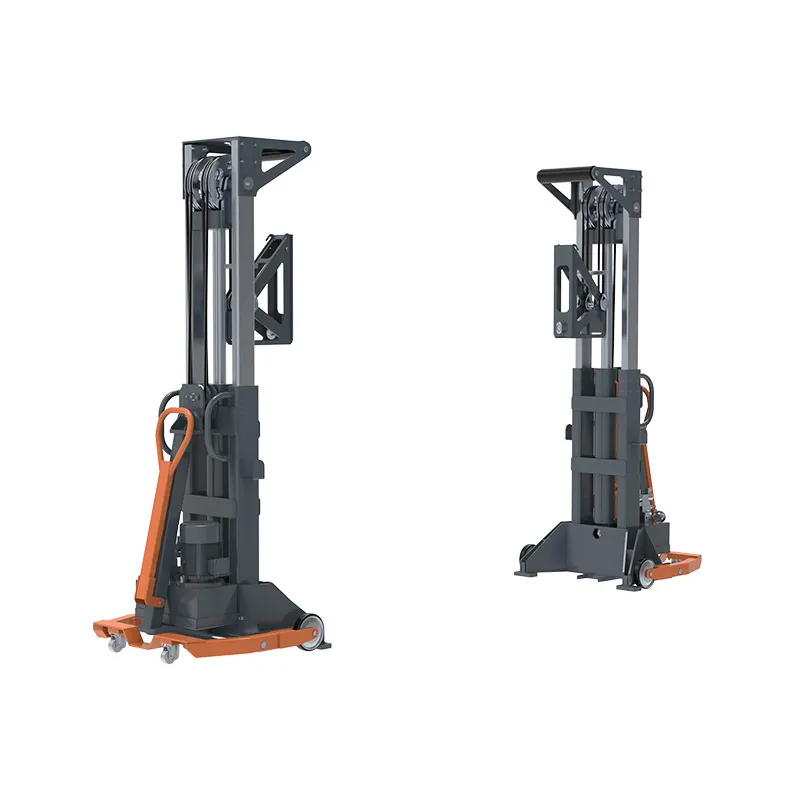
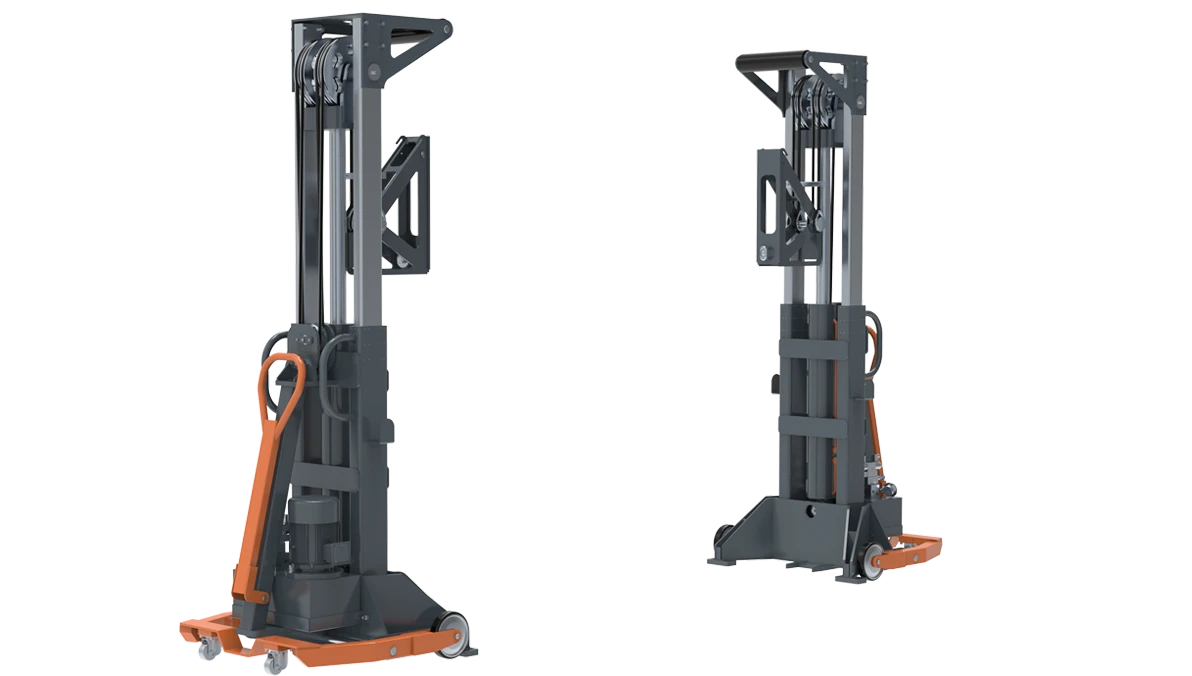
If you spend time on loading docks, you learn quickly: the bottleneck isn’t always manpower; it’s the gear. The container lifting jacks I’ve been tracking lately—made in No.28, Wei’Er Road, Anping County, Hebei Province, China—are a bit of a quiet revolution. They lift the entire box, fast, clean, and—surprisingly—without the circus of cranes or reach stackers. Many customers say this is the missing middle between forklifts and cranes.
Trend check: why jacks now?
Two things: inland logistics growth and ESG pressure to do more with less. Actually, a lot of off-dock yards want flexible, lower-CAPEX lifting. Jacks are modular, easy to transport, and—compared with yard cranes—cheap to maintain. Ports, 3PLs, mining camps, even ag co-ops are adopting them for pop-up transloading lines.
Product snapshot: Container Lifting Jacks
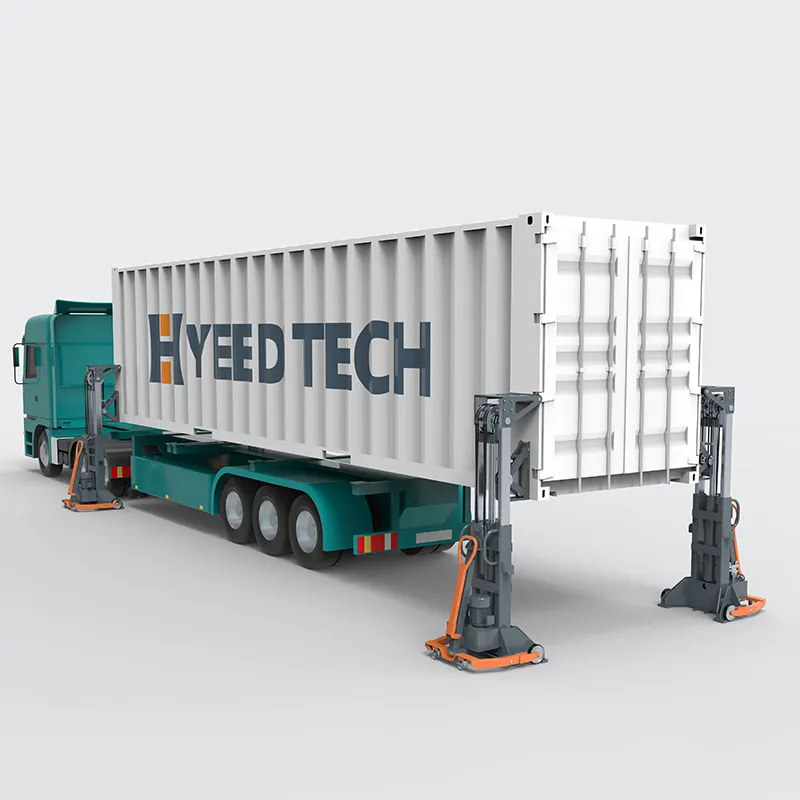
These jacks are built to lift and hold full ISO containers for loading/unloading at grade, trimming time and labor. I’ll spare the sales fluff; here’s what matters in the yard.
| Spec | Typical Value (≈, real-world may vary) |
|---|---|
| Rated capacity per jack | 20–30 t each (systems ≈ 60–120 t) |
| Lift height | ≈ 1.6–1.8 m (safely clears truck beds) |
| Lift speed | 6–12 mm/s (synchronous control) |
| Leveling accuracy | ±2–3 mm across four points |
| Power | Hydraulic pack, 380–415 V 3Φ (options: 220/480 V) |
| Ambient range | −20 to +50 °C; IP54–IP65 control enclosure |
How they’re built (and tested)
Materials: high-strength structural steel (e.g., Q345B) with quenched alloy pins. Methods: robotic welding, ultrasonic weld inspection, shot blasting (≈ Sa 2.5), powder coat or zinc-rich primer for corrosion. Controls: proportional valves + PLC for synchronous lift. Testing standards: static proof load ≈ 125% for 10 min, functional at 110%, and synchronization drift checks per practical interpretations of ISO 3874 and ASME B30.1 guidance. Typical service life: 8–12 years with annual inspections; seals every 2–3 years depending on cycles.
Where they fit
- Inland depots and 3PL yards for grade-level unloading
- Manufacturing plants doing floor-to-container kitting
- Mining and construction camps needing temporary transload pads
- Ag cooperatives—grain totes, seed pallets, fertilizers (with spill control)
Advantages: quick deployment, small footprint, lower CAPEX vs. cranes, friendly training curve. To be honest, the biggest win I hear is fewer truck queuing headaches.
Vendor landscape (quick take)
| Vendor | Strengths | Lead Time (≈) | Price Band |
|---|---|---|---|
| Container Handling Systems Corp | Balanced spec, robust synchronization, customization | 6–10 weeks | Mid |
| Vendor A (EU) | Premium finishes, extensive CE documentation | 10–14 weeks | High |
| Vendor B (APAC) | Aggressive pricing, basic controls | 4–8 weeks | Low–Mid |
Customization (what buyers actually ask for)
- Higher lift (up to ≈ 2.0 m) and low-temperature seals
- Remote pendant or wireless HMI; geo-fencing for safety
- Hot-dip galvanizing for coastal yards
- Fork pockets, twistlock adapters, or chassis interface pads
Field notes and feedback
A Midwest 3PL told me they cut average unload times from ≈ 65 to 38 minutes per container; labor reassignments paid back in under nine months. Another user in a coastal climate wanted better corrosion protection—after shifting to zinc+polyurethane topcoat, annual touch-ups dropped by half.
Certification docs typically include ISO 9001 quality management and CE conformity packs; where applicable, jacks are validated against ISO 3874 handling guidance and ASME B30.1 jack safety clauses. I guess the simplest test to ask for is a 125% static proof with traceable gauges, plus a 10,000-cycle actuation test log.
Bottom line
Container Handling Systems Corp is leaning into practical, modular lifting that meets yards where they are. Not perfect for every heavy-lift scenario, sure—but for a lot of inland ops, these jacks are the right tool, right now.
Authoritative citations
- ISO 3874: Freight containers—Handling and securing.
- ASME B30.1: Jacks, Industrial Rollers, Air Casters, and Hydraulic Gantries.
- ISO 1496-1: Series 1 freight containers—Specifications and testing—Part 1: General cargo.
- ISO 9001: Quality management systems—Requirements.
Latest News
-
Efficient automated hot air drying equipment for steel structure application
NewsApr.16,2026 -
Efficient hot air drying system for steel structure spraying line
NewsApr.09,2026 -
Optimizing Steel Structure Spraying with Hot Air Drying Technology Solutions
NewsApr.07,2026 -
HighEfficiency Hot Air Drying Painting Equipment for Superior Industrial Coatings
NewsApr.04,2026 -
Optimizing Industrial Processes with Hot Air Furnace Heating Spraying Systems
NewsMar.31,2026 -
Comprehensive Tailormade Steel Structure Spraying Solution for Enhanced Durability
NewsMar.28,2026 -
Optimizing Steel Structure Protection through Customization and Integration of Spraying System
NewsMar.26,2026