Comprehensive Guide to Welding Booth Exhaust Systems: Safety, Innovation & Global Insights
Understanding the Essential Role of Welding Booth Exhaust Systems
When you think about a welding booth exhaust system, I suppose the first thing that comes to mind is clean air—right? It's one of those unsung heroes in industrial safety that quietly safeguards workers and the environment. Actually, the importance of these systems goes beyond just blowing fumes away. They play a pivotal role globally, as industries swell and regulations tighten to combat pollution and occupational hazards.
Globally, the industrial manufacturing sector contributes about 15% of air pollution (according to the United Nations Environment Programme). Welding fumes, which contain tiny metal particulates and gases, are a part of that. Understanding welding booth exhaust technology directly translates to better workplace health outcomes and environmental compliance.
What Exactly Is a Welding Booth Exhaust System?
Put simply, a welding booth exhaust system is a mechanical setup designed to capture and filter the hazardous fumes, smoke, and airborne particles that arise during welding. Think of it as a specialized ventilation solution that vacuums out the nasty, often invisible contaminants before they can cause harm. This technology also plays a significant role in meeting modern industry safety standards, like those defined by the ISO and OSHA.
Oddly enough, it’s not just about keeping a factory clean; it’s about preserving worker health, reducing fire risks, and minimizing environmental impact—an intersection of human welfare and industrial innovation.
Key Components of Welding Booth Exhaust Systems
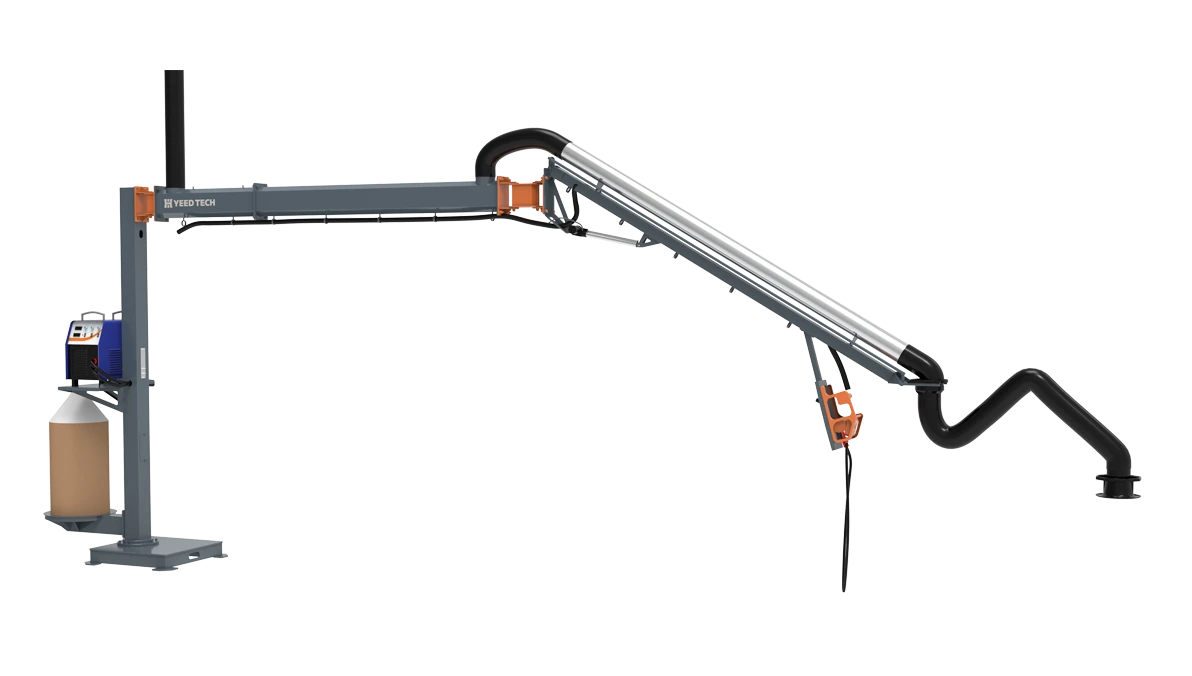
1. Fume Extraction Arm
This is basically the “grabber” that sucks fumes right from the source. Its flexibility and range are crucial because welders move around a lot.
2. Filtration Unit
A series of filters—usually pre-filters, HEPA filters, and often activated carbon filters—work to trap particulates and harmful gases before releasing cleaned air.
3. Blower and Fan System
The powerhouse that keeps air moving. Its capacity determines how effectively fumes are removed, especially in larger booths.
4. Control Panel
For regulating airflow, setting timers, and sometimes monitoring filter status. Increasingly, these are becoming smart-enabled for remote monitoring.
5. Ductwork and Exhaust Outlet
Channels the cleaned air safely out of the facility, often equipped with noise dampening or anti-backflow features.
Mini takeaway: The performance of a welding booth exhaust system hinges on how well these parts work together to ensure optimal air quality and worker safety.
Global Applications and Typical Use Cases
Welding exhaust systems are entrenched in industries worldwide. In automotive manufacturing hubs — say Germany or Japan — these systems are a legal staple to meet stringent emission standards. In the United States and Canada, occupational safety agencies mandate their use to protect welders from long-term respiratory issues.
Oddly enough, they’re also critical in more remote or developing regions, where industrial zones might lack broad environmental controls. For instance, NGOs working in post-disaster rebuilding scenarios use portable welding booth exhaust system solutions to ensure safe on-site welding in makeshift workshops. Similarly, mining operations in South America rely on durable systems capable of withstanding harsh conditions.
A Quick Specification Overview
| Feature | Typical Value/Range | Notes |
|---|---|---|
| Airflow Capacity | 500 - 2000 CFM (Cubic Feet per Minute) | Depends on booth size and application |
| Filter Type | HEPA + Activated Carbon | Removes particulates & gases |
| Noise Level | 55-70 dB | Comparable to normal conversation |
| Power Consumption | 1.5 - 5 kW | Varies with motor size |
| Mobility | Fixed or mobile | Depends on use case |
Comparing Popular Welding Booth Exhaust System Vendors
| Vendor | Filter Efficiency | Customization | Price Range | After-Sales Support |
|---|---|---|---|---|
| PureAir Systems | 99.97% HEPA | High (built-to-order) | $$$ | 24/7 Phone & Field Service |
| VentGuard | 99% with Carbon Filters | Medium (standard models) | $$ | Email Support Only |
| FumeAway Tech | 95% HEPA+ | Low (limited options) | $ | Basic Warranty |
Advantages and Long-Term Benefits
Frankly, a well-designed welding booth exhaust system enhances safety by actively removing toxins, thus reducing incidents of occupational diseases such as welders’ lung and metal fume fever. Add to that the cost savings from avoiding fines due to non-compliance, and the longevity of equipment protected from corrosive fumes.
From a sustainability standpoint, filtering and controlling emissions contribute positively to an organization's carbon footprint—an increasingly important KPI. And there’s the emotional value: workers feel safer and thus more confident, which can boost productivity and reduce turnover. It’s this blend of logic and human-centered design that makes these systems truly invaluable.
Future Trends and Innovations
Looking forward, the industry leans towards smart, IoT-enabled monitoring systems that predict filter saturation levels, optimize power usage, and integrate with building management systems. There’s also growing interest in using bio-based filters and energy-efficient motors to complement green energy initiatives.
Automation is making its way in – robotic welders combined with self-adjusting exhaust arms enhance precision and safety. Then there’s modular design that supports rapid setup in emerging industrial zones or disaster relief areas.
Common Challenges & How They’re Being Solved
One challenge I hear often from field engineers is maintaining consistent airflow despite variable welding conditions. Too little airflow and fumes linger; too much can disrupt welding arcs. The solution often involves variable speed fans paired with sensor feedback loops, which – admittedly – not all systems have yet.
Filter maintenance is another frequent pain point. Easy-to-access cartridges and automated filter health alerts are becoming standard, but smaller shops often struggle with upkeep. Training and service contracts can make a big difference here.
FAQ: Frequently Asked Questions About Welding Booth Exhaust Systems
- Q: How often should the filters in a welding booth exhaust system be replaced?
A: Filters typically need replacement every 6-12 months depending on usage levels and pollutant concentrations. High-volume shops might require more frequent checks to maintain efficiency and air quality. - Q: Can welding exhaust systems be retrofitted into existing booths?
A: Yes, many systems are designed for modular installation and can be adapted to older booths. However, a site assessment is often necessary to ensure compatibility and optimal performance. - Q: Are portable welding booth exhaust systems effective for on-site repairs?
A: Absolutely. Portable units are especially useful in temporary setups or remote locations where fixed ventilation isn’t feasible. Just keep in mind their airflow capacity to match the welding activity. - Q: What regulations govern welding booth exhaust systems?
A: Regulations vary but commonly involve OSHA standards for occupational exposure, local environmental air quality laws, and ISO guidelines on industrial ventilation and safety. - Q: How energy-efficient are modern welding booth exhaust systems?
A: New models often include variable-speed drives and energy-saving motors, reducing power consumption by up to 40% compared to older units—good news for operational costs and environmental impact.
Conclusion
All in all, investing in a robust welding booth exhaust system isn’t just a regulatory checkbox or a minor factory upgrade—it's a commitment to a safer, cleaner, and more sustainable industrial future. In real terms, this means healthier workers, fewer interruptions, and a positive environmental footprint. If you’re exploring options or just starting out, do check out our detailed guides and product options at https://www.yeedtech.com, where the latest solutions are just a click away.
It feels like we’re standing at the crossroads of tradition and innovation here, and how we design and deploy welding booth exhaust systems will reflect industrial responsibility for decades to come.
Mini takeaway: Thoughtful deployment of these systems can transform workplace health and support planetary goals — truly a win-win.
References:
1. United Nations Environment Programme – Industrial Emissions Data (https://www.unep.org)
2. ISO Standards for Industrial Ventilation (https://www.iso.org)
3. OSHA Occupational Exposure Guidelines (https://www.osha.gov)
Latest News
-
Efficient automated hot air drying equipment for steel structure application
NewsApr.16,2026 -
Efficient hot air drying system for steel structure spraying line
NewsApr.09,2026 -
Optimizing Steel Structure Spraying with Hot Air Drying Technology Solutions
NewsApr.07,2026 -
HighEfficiency Hot Air Drying Painting Equipment for Superior Industrial Coatings
NewsApr.04,2026 -
Optimizing Industrial Processes with Hot Air Furnace Heating Spraying Systems
NewsMar.31,2026 -
Comprehensive Tailormade Steel Structure Spraying Solution for Enhanced Durability
NewsMar.28,2026 -
Optimizing Steel Structure Protection through Customization and Integration of Spraying System
NewsMar.26,2026